Wood Fence Installation and Repair: Surviving Bradenton’s Sun and Humidity
A wood fence in Bradenton does not fail the way a wood fence fails in Ohio or Tennessee. Here, the enemy is a specific combination: salt-heavy humidity that never lets the wood fully dry, afternoon sun that bakes the south and west faces, sandy soil that shifts around posts, and a summer storm season that tests every connection. Wood fence humidity damage in this climate is a serious concern for property owners. If you own a commercial lot, a contractor yard, or a small plaza, understanding wood fence installation and repair in this climate is the difference between a fence that holds its line for years and one that generates a repair call every season. This guide explains what actually breaks wood fencing here, what good installation looks like, and how to decide between repair and replacement without guessing.
Why Wood Fences Fail Faster on the Gulf Coast
Most wood fence problems in Bradenton trace back to moisture, not age. The humidity along this stretch of Florida keeps wood damp at the cellular level for long stretches, which invites rot, fungus, and insect activity. Then the sun does the opposite kind of damage. Intense UV exposure dries out the surface, bleaches the color, and opens small cracks that let the next rainstorm soak in deeper.
The result is a cycle. Wet, then baked, then wet again. Wood expands and contracts through that cycle, and fasteners loosen, pickets cup and warp, and rails pull away from posts. A fence that looks fine in year two can look tired by year four if nobody planned for the climate.
There is a third factor people overlook: the ground itself. Much of Bradenton sits on sandy, low-lying soil with a high water table. Water does not run off these lots the way it does on clay or rocky ground. It pools, it lingers, and it keeps the bottom few inches of a fence wet far longer than the rest. Wood fence humidity damage happens fastest at the ground line, where moisture lingers longest and the wood cannot dry between rain events. That is why the bottom of a wood fence here almost always fails first.
The Post Is the Weak Point When Wood Fence Humidity Damage Strikes
Property owners tend to judge a fence by its face. They repaint or restain the panels, keep them looking sharp, and assume the fence is healthy. Meanwhile the posts, the part doing the structural work, rot quietly at and below the ground line where nobody looks.
Wood posts in wet soil are prone to rotting, warping, and twisting over time. This is a known trade-off compared to steel posts, which cost more up front but do not rot. When a post goes, the panels it carries start to lean, gates sag out of alignment, and a strong storm gust can take a whole section down. Many "my fence blew over" calls after a summer storm are really "my posts had been rotting for three years" calls.
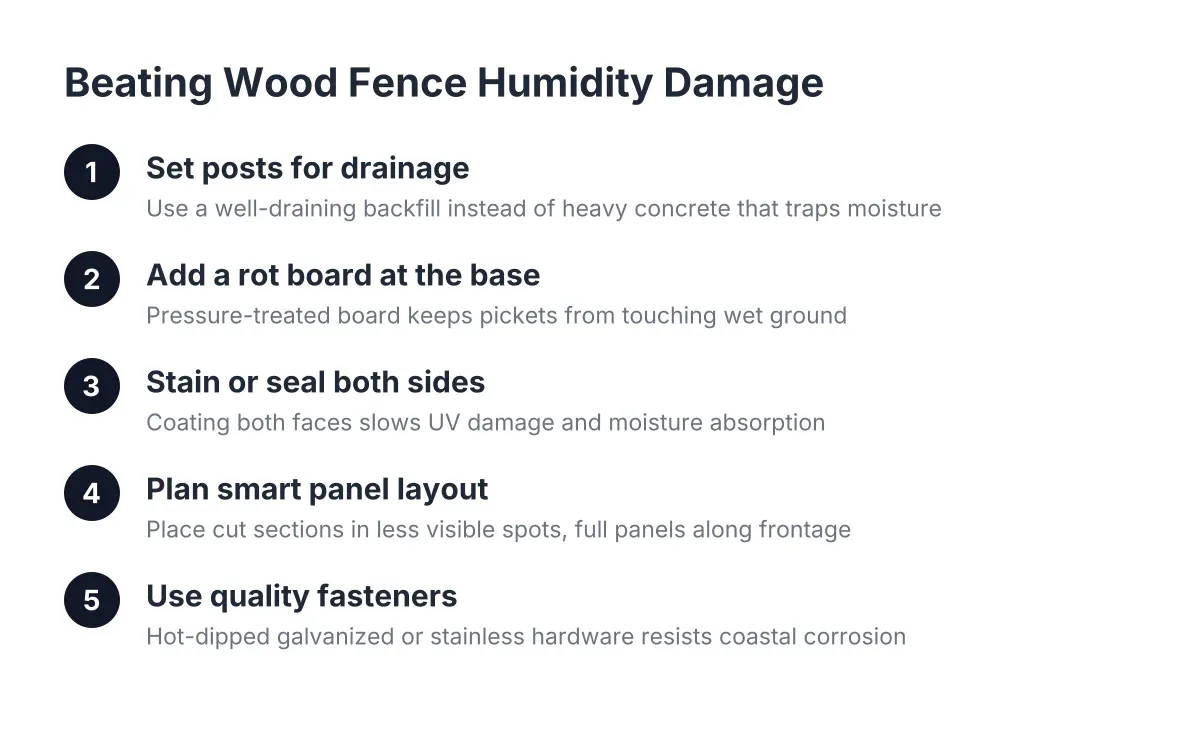
There is also a common misconception worth clearing up. People assume more concrete around a post means a stronger post. In practice, concrete backfill can trap moisture directly against the wood and speed up rot compared to a well-draining material. How the post is set matters as much as what the post is made of. A good installer in this area thinks about drainage at every post hole, not just depth.
What Good Wood Fence Installation Looks Like in Bradenton
Wood fence installation in Bradenton done well accounts for the climate at every step: post depth and setting method suited to sandy soil, material choices that resist rot, a bottom detail that keeps pickets out of standing water, and a layout that respects flood-zone setbacks and local permitting. Skip any of those and the fence starts aging the day it goes up.
Here is what the scope of a proper fence installation usually includes, and what tends to be extra:
- Included in most quotes: site walk and layout, utility line locates, post hole digging and setting, rails and pickets, one or more walk gates, and haul-away of old fencing on a replacement job.
- Often extra or quoted separately: tear-out of an old fence with concrete footings, staining or sealing, automatic gate installation or a motorized gate operator, permit fees, and clearing heavy vegetation along the fence line.
Ask any fence company to spell out which side of that line each item falls on before you sign. Vague scopes are where surprise charges live.
Avoiding Wood Fence Humidity Damage Through Material and Detail Choices
Pressure-treated pine is the workhorse for wood fencing in this region because the treatment resists rot and insects. Cedar looks better and resists decay naturally, but it costs more. Redwood is a premium option that holds its color well and resists rot, though its price keeps it rare on commercial perimeters here.
A few construction details matter more than the species choice:
- A rot board at the bottom. A pressure-treated board run horizontally along the base keeps the pickets from touching the ground. On a cedar fence especially, this stops the pickets from wicking up moisture from pooled water, which protects the fence's longevity on a low-lying Bradenton lot.
- Stain or seal both sides. Coating only the street side is a cosmetic move. Staining both faces slows UV damage and moisture absorption, and it meaningfully extends the fence's working life and the return on what you spent.
- Smart panel layout. On jobs that mix full panels and cut sections, a careful crew places the cut sections in less visible spots and runs full panels along the frontage. It costs nothing and the fence reads cleaner from the road.
- Quality fasteners. Coastal humidity eats cheap hardware. Hot-dipped galvanized or stainless fasteners resist the corrosion that loosens panels over time.
Permits, Setbacks, and the Stuff Nobody Wants to Deal With
Fence work in Manatee County typically involves permitting, height limits, and setback rules, and flood-zone considerations can shape where and how a fence goes in on low-lying parcels. If your lot sits near a waterway or in a mapped flood zone, the rules get more specific. A contractor serving Bradenton full time deals with these requirements constantly and should handle the paperwork as part of the job. If a bidder shrugs at the permit question, that is a signal, not a detail.
This is also a place where professional help is not optional. Misplacing a fence across a setback or a neighbor's line can force a tear-out at your expense. When boundaries are unclear, a survey before installation is cheaper than a dispute after.
Wood Fence Repair: What Can Be Saved and What Cannot
Wood fence repair makes sense when the damage is localized and the structure underneath is sound. Replacing a handful of warped pickets, resetting one leaning post, refastening loose rails, or rehanging a sagging gate are all standard repair work. These jobs restore the fence without the cost of starting over, and a good wood fence repair company should tell you plainly which category your fence falls in.
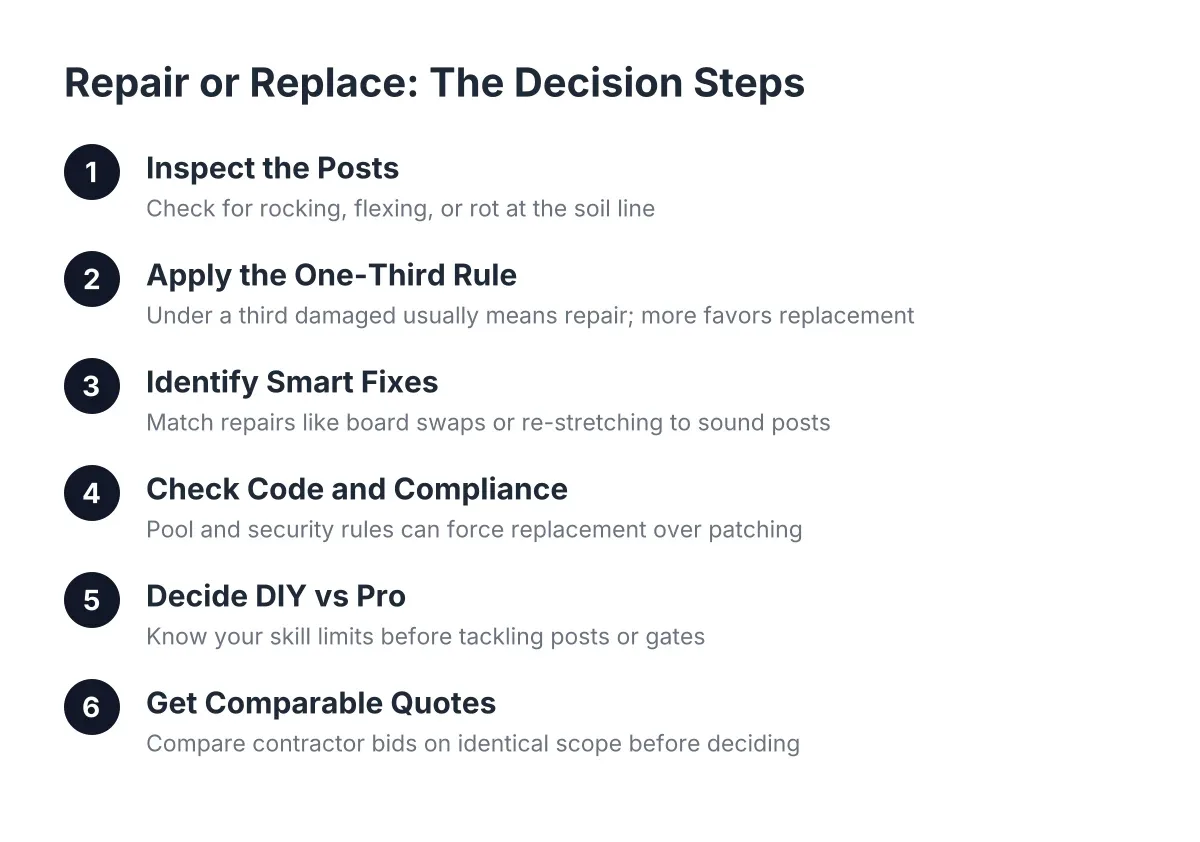
Replacement becomes the honest answer when the failure is systemic. If a third or more of your posts show rot at the ground line, repairing them one at a time just spreads the cost of a new fence over three frustrating years. The same logic applies when panels are gray, cracked, and brittle across the whole run. At that point you are paying repair prices for replacement-level problems.
There is a useful middle path worth knowing about. On a fence with failing wood posts but solid concrete footings, an interim post repair that preserves those footings can keep the fence standing now. Later, when you do a full replacement, ideally with steel posts that will not rot, that earlier repair effectively served as a down payment on the upgrade instead of wasted money. For a business owner who needs to budget fence work across fiscal years, that sequencing matters.
Repair or Replace: A Quick Decision Framework
- Repair when fewer than a quarter of posts are compromised, damage is from a single event like a fallen limb, and the wood overall still takes a fastener firmly.
- Replace sections when one run has failed, for example the west-facing stretch that takes full afternoon sun, but the rest is sound.
- Replace the fence when rot is widespread at the post lines, panels crumble at the edges, or repair quotes start approaching half the cost of new fence installation.
When to Handle It Yourself and When to Call
A property owner or maintenance tech can safely handle the small stuff: swapping a cracked picket, tightening gate hinges, and applying stain or sealer on a dry week. Those tasks need basic tools and a free afternoon.
Call a professional for anything structural. Leaning posts, storm damage across multiple sections, a gate that no longer closes square, or any fence along a property line or right-of-way belongs with a contractor. Post work in particular looks simple and is not; depth, plumb, spacing, and drainage all have to be right, and in sandy soil there is no forgiveness for shortcuts. In addition, call promptly if a fence section is down on a commercial lot. An open perimeter is a security and liability problem, not a cosmetic one.
What Wood Fence Work Costs and How Long It Takes
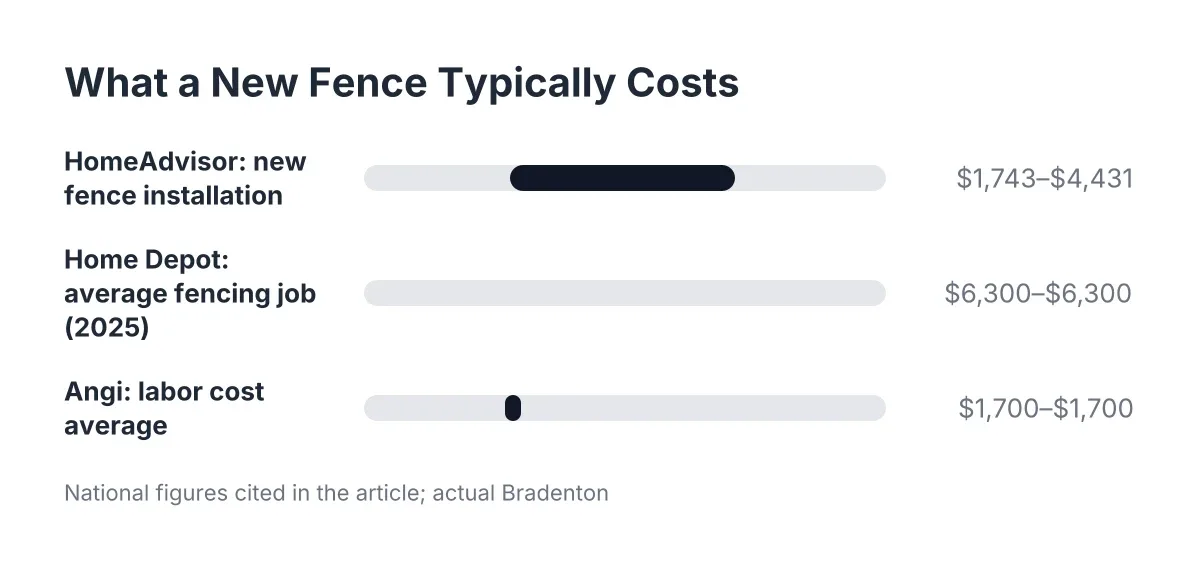
Nobody can quote your fence without seeing your lot, but national figures frame the conversation. Fence installation averages $3,277 nationally, with most projects falling between $1,860 and $4,843 depending on length and material, according to Angi. HomeAdvisor's data lands in a similar band, with homeowners spending between $1,743 and $4,431 and averaging $3,059. For a full privacy fence, Forbes puts the average at $3,300, with a range from $1,600 to $7,000. Labor is a real share of the total; Angi reports the average homeowner spends about $1,700 in labor fees on a fence installation.
Commercial perimeters usually run longer than residential yards, so budgets scale with footage. For repair work, the drivers are the number of posts involved, whether old concrete footings need to be broken out, access along the fence line, and how much matching material the fix requires. Wood fence repair costs are usually discussed per section or per post rather than as one flat number, and a fair contractor will walk you through those factors line by line rather than handing you a single mystery figure.
Turnaround depends on scope and permitting. A small repair is often a one-day visit once materials are on hand. A full tear-out and new installation on a commercial lot takes longer, especially when permits are in play, and summer storm season in 2026 will do what it always does to outdoor work schedules. Ask every bidder for their expected timeline in writing, including the permit step, so you can plan around your operations.
For a concrete picture, suppose you run a contractor yard off 301 in Bradenton with a wood privacy fence screening your equipment from the road. After a June storm, two sections lean badly. An inspection in that scenario might find six rotted posts along the low side of the lot where water pools, while the elevated frontage posts are still solid. The honest recommendation would be a sectional repair with a rot board added on the low run, not a full replacement, with a note to budget for steel posts whenever the rest of the fence ages out. That kind of staged answer protects both the perimeter and the budget.
Choosing a Wood Fence Contractor in the Bradenton Area
Searching "fence company near me" or "wood fence repair contractors" returns a long list, and the websites all look the same. The separation shows up in the questions you ask. Three matter most:
- How will you set posts in this soil, and what goes in the hole? You want an answer that mentions depth, drainage, and sandy soil, not a generic recitation. Anyone working regularly in Manatee County should talk about the water table without prompting.
- What is included in the quote, and what triggers a change order? A fair fence estimate itemizes tear-out, haul-away, gates, hardware, and permits. Lump-sum quotes hide the gaps you pay for later.
- Have you done commercial work at this scale? If you manage a storage facility or an auto lot, ask about longer runs, gate access, and scheduling around business hours. Commercial fencing contractors near me is a common search for a reason; residential-only crews can struggle with commercial scope, scheduling, and documentation needs.
A fair quote should follow a site visit, not a phone call. It should name the wood species, post type and spacing, picket style, hardware, and whether staining is included. It should also state the timeline and the permit plan. If one bid comes in far below the others, find the line item that is missing, because something is.
One honest limitation to weigh: even a well-built wood fence demands more upkeep in this climate than a vinyl fence or a chain link fence. If your priority is a maintenance-free perimeter and appearance is secondary, PVC fence or commercial chain link may serve a business lot better, and a straight-shooting contractor will say so rather than sell you wood by default.
Getting a Straight Answer on Your Fence
Wood fencing can last in Bradenton, but only when the installation respects the humidity, the sun, and the sandy ground it stands in, and only when repairs happen before small rot becomes structural failure. Whether you need a few posts reset, a storm-damaged run rebuilt, or a full fence replacement with an automatic gate for controlled access, the first step is an honest look at what you have.
Manatee Fence Co handles wood fence installation and repair, along with vinyl, chain link, privacy fence, and gate installation services, serving Bradenton homeowners and commercial property owners. If you want a plain-language walkthrough of your options and the factors that will drive your fence cost up or down, reach out for a fence estimate and get a clear answer before you commit to anything.
If you need wood fence installation, Manatee Fence Co can help.
Prefer to talk it through? Call (941) 219-6611 — a quick call is usually the fastest way to get a straight answer for your situation.