Commercial Fence Installation in Bradenton: Security and Durability Guide
Securing a commercial lot in Bradenton is a different problem than fencing a backyard. If you own a self-storage facility, an auto lot, a contractor yard, or a small retail plaza, the fence is not decoration; it is part of how you control what rolls in and out of your property. Understanding the commercial fence installation cost for your property is the first step to protecting it. This guide walks through commercial fence installation in Bradenton from the ground up: what the work includes, what drives the cost, how our local conditions affect material choices, and how to tell a solid quote from a guess.
The short version is this. A commercial fence has two jobs, keep people and vehicles out when you want them out, and let the right people in without friction. Everything else, material, height, gate type, follows from how seriously your property needs to do those two jobs.
Why Commercial Lots in Bradenton Need a Different Kind of Fence
A residential fence mostly manages privacy and pets. A commercial perimeter manages risk. The stakes are different, and so are the failure modes.
Consider what actually goes wrong on an unfenced or badly fenced commercial lot. Equipment and materials walk off overnight. Vehicles cut across the property. An insurance carrier or a landlord flags the site and gives you a deadline to secure it. A single theft incident can cost more than the fence that would have prevented it, and it usually arrives without warning.
Bradenton adds its own layer of problems. Sandy soil gives posts less grip than clay or loam, so post depth and concrete footing size matter more here than in most of the country. A high water table on low-lying parcels affects how deep you can set posts and how the concrete cures. Salt air and humidity attack unprotected metal. Storm-season wind loads push on every panel and gate leaf you install. A fence built to generic national habits can fail early here; a fence built for this ground and this weather holds up.
Therefore, the first question is not "what does fencing cost per foot." It is "what does this specific lot need to stay secure through a Gulf Coast summer and a storm season." Cost follows from that answer, not the other way around.
What Commercial Fence Installation Includes
Commercial fence installation covers site layout, post setting, fabric or panel installation, gate hanging, and cleanup, along with the planning work that happens before anyone digs. A complete scope should be itemized in writing so you know exactly what you are paying for and what would count as an extra.
Here is what a thorough commercial job in Bradenton usually involves:
- Site walk and layout. Marking the fence line against the survey, checking grade changes, and identifying obstacles like trees, drainage swales, and existing structures.
- Utility locates. Calling in locates before digging so buried power, water, and communication lines get marked. This step protects you from expensive damage and downtime.
- Permitting and code documentation. Commercial fencing in Manatee County typically requires permits, and your site may have setback rules, especially in flood zones. A good contractor handles the paperwork or tells you plainly what you need to pull yourself.
- Post setting. Digging to the right depth for sandy soil, setting posts in a generous concrete footing on all sides, and allowing cure time before hanging fabric or panels. Skimping here is the single most common cause of early fence failure.
- Fabric, panel, or picket installation. Stretching chain link fabric to proper tension, or hanging panels plumb and level across uneven grade.
- Gate installation. Swing gates, slide gates, or automatic gate systems, hung on heavier posts than the fence line itself because gates carry moving load every day.
- Cleanup and walkthrough. Hauling off spoils and scrap, and walking the finished line with you before the job closes.
What usually counts as extra: removing an old fence, clearing heavy vegetation along the line, rock or root obstructions, electrical trenching for a motorized gate, and access control hardware like keypads or remotes. None of these are unreasonable charges; the problem is only when they show up as a surprise instead of a line item.
Choosing Materials for Security and Bradenton Weather
Material choice is where security goals meet the local climate. Each option trades cost, visibility, and maintenance differently, and the right answer depends on what the fence is protecting.
Chain Link: The Commercial Workhorse
For most small commercial and light-industrial properties, a chain link fence is the starting point. It is the most cost-effective way to enclose a large perimeter, it does not block sightlines, and that visibility is a security feature. A passing patrol car or a neighbor can see activity inside your lot. Galvanized fabric resists our humidity, and vinyl-coated chain link adds another layer of corrosion protection plus a cleaner look for customer-facing sites.
Height matters more than most owners expect. Taller fabric, barbed wire where code allows it, and bottom rail or tension wire to prevent lift-under all raise the barrier against intrusion. Commercial-grade framework, meaning heavier gauge posts and rails than residential product, is worth specifying; it is what stands up to a ladder leaned against it or a storm gust pushing on it.
Wood and Vinyl: When Screening Matters
Some commercial sites need concealment, not just containment. A contractor yard full of equipment, or a storage area behind a retail plaza, may be better served by a privacy fence that hides what is inside. Wood fencing costs less up front but demands maintenance in Bradenton sun and humidity. A vinyl fence, sometimes called a PVC fence, costs more initially but shrugs off moisture and never needs staining.
In addition, hybrid layouts are common. Suppose a small retail plaza owner runs chain link along the back lot line where nobody looks, and a vinyl privacy fence along the street-facing side where appearance affects tenants. That mix puts the budget where it does the most work, which is exactly how an experienced fence company should think about your site.
The Gate Is the Weak Point, So Build It Strongest
Every perimeter is only as secure as its gate. For commercial lots, automatic gate installation changes daily operations as much as security. An electric gate with a keypad, card reader, or remote lets employees and tenants in without someone walking out to unlock a chain, and it closes behind them every time. A manual gate left propped open all day is not a security measure; it is a formality.
Slide gates generally suit commercial drives better than swing gates where space is tight or wind exposure is high. A motorized gate also needs power, a safe operator rated for the gate's weight, and safety devices like photo eyes. Those components should appear in the quote, not surface later as change orders.
What Drives Commercial Fence Installation Cost in Bradenton
The cost of commercial fence installation in Bradenton depends on linear footage, material and gauge, fence height, gate count and type, site conditions, and permitting. No honest contractor can give you a real number without seeing the property, but you can understand every factor before the first phone call.
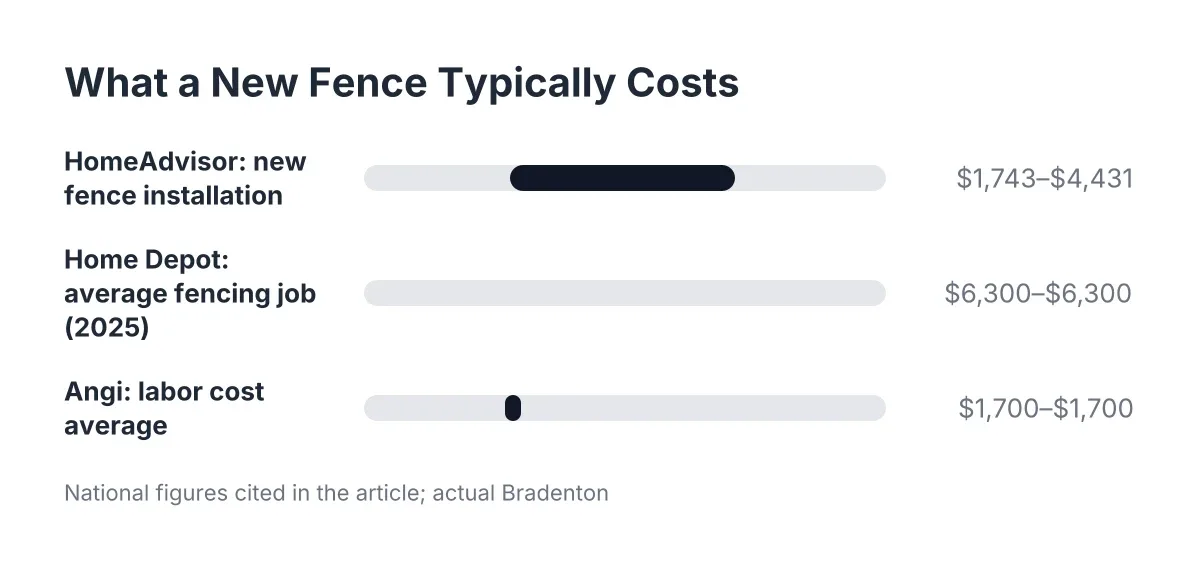
For scale, HomeAdvisor reports that fencing runs between $6 and $50 per linear foot on average, with most professional installations landing around $23 per linear foot including materials. Commercial jobs often sit toward the higher end because of heavier-gauge framework, taller heights, and gate automation. Angi reports the average homeowner spends about $1,700 on labor alone for fence installation; commercial labor scales with the same factors, just across more footage.
Here is what moves the number up or down on a commercial job:
- Linear footage. The biggest driver. A two-acre perimeter is a different project than enclosing a dumpster corral.
- Material and gauge. Commercial-grade chain link framework costs more than residential, and vinyl-coated fabric costs more than bare galvanized.
- Height and toppers. Taller fences and barbed wire additions add material and labor per foot.
- Gates. Every gate costs more per foot than fence line, and an automatic gate system with an operator, power run, and access control is its own budget line.
- Site conditions. Sandy soil, a high water table, roots, buried debris, and grade changes all affect dig time and concrete volume. Posts in loose sand need deeper settings and more concrete surrounding them on all sides to resist movement.
- Demolition and clearing. Removing an existing fence or cutting back vegetation along the line adds labor and disposal.
- Permits and documentation. Commercial permits, and any engineering documentation your site or insurer requires, take time and carry fees.
One misconception costs owners real money: picking the lowest bid. A fence priced noticeably below the other quotes usually got there by using lighter framework, shallower posts, or less concrete. In Bradenton's sand and storm wind, that fence leans within a few seasons and gets rebuilt, which costs more in total than the better installation would have cost once. Price differences between quotes often reflect real differences in construction practice and expected lifespan, not just markup.
Local Rules, Permits, and Timing for Bradenton Properties
Commercial fencing in the Bradenton area runs through local permitting, and flood-zone parcels add setback and elevation considerations. Confirm who pulls the permit before work is scheduled, because an unpermitted commercial fence can stall a sale, a lease, or an insurance claim later.
A few local realities to plan around:
- Flood zones and setbacks. Low-lying parcels near the river or coast may carry setback rules that affect where the fence line can run. Verify this before the layout is final, not after posts are set.
- Wind exposure. Storm season shapes material choice. Open chain link lets wind pass through; solid privacy panels catch it like a sail and need stronger posts and footings to compensate.
- Scheduling around your operations. Many commercial owners need crews working outside business hours or in phases so the lot stays usable. Raise this early; it affects scheduling more than cost.
- Cure time. Concrete footings need time to set before gates hang and fabric stretches. A contractor who promises everything in one day on sandy ground is cutting a corner you will pay for later.
As of 2026, permit timelines and material availability can shift with demand, so build a buffer into any deadline an insurer or landlord has given you. If your deadline is tight, say so up front; a contractor can often phase the work to secure the most vulnerable section first.
DIY or Professional: Where the Line Sits for Commercial Work
A homeowner with patience can set a few wood fence posts on a weekend. A commercial perimeter is a different animal, and the line between do-it-yourself and call-a-professional sits in a different place.
You can reasonably handle the planning side yourself: pulling your survey, walking the line, photographing obstacles, and listing your security requirements. That preparation makes every estimate faster and more accurate.
However, the installation itself belongs with a professional on commercial jobs. Tensioning chain link fabric across long runs, setting gate posts that carry a motorized gate, trenching power safely, and meeting commercial permit requirements are not weekend skills. An automatic gate in particular involves electrical work and safety devices that must function correctly every cycle; a gate that fails on a vehicle is a liability problem, not a repair problem. If your site has unusual conditions, such as contaminated soil, shared property lines in dispute, or engineering requirements from an insurer, bring in a professional before committing to any layout.
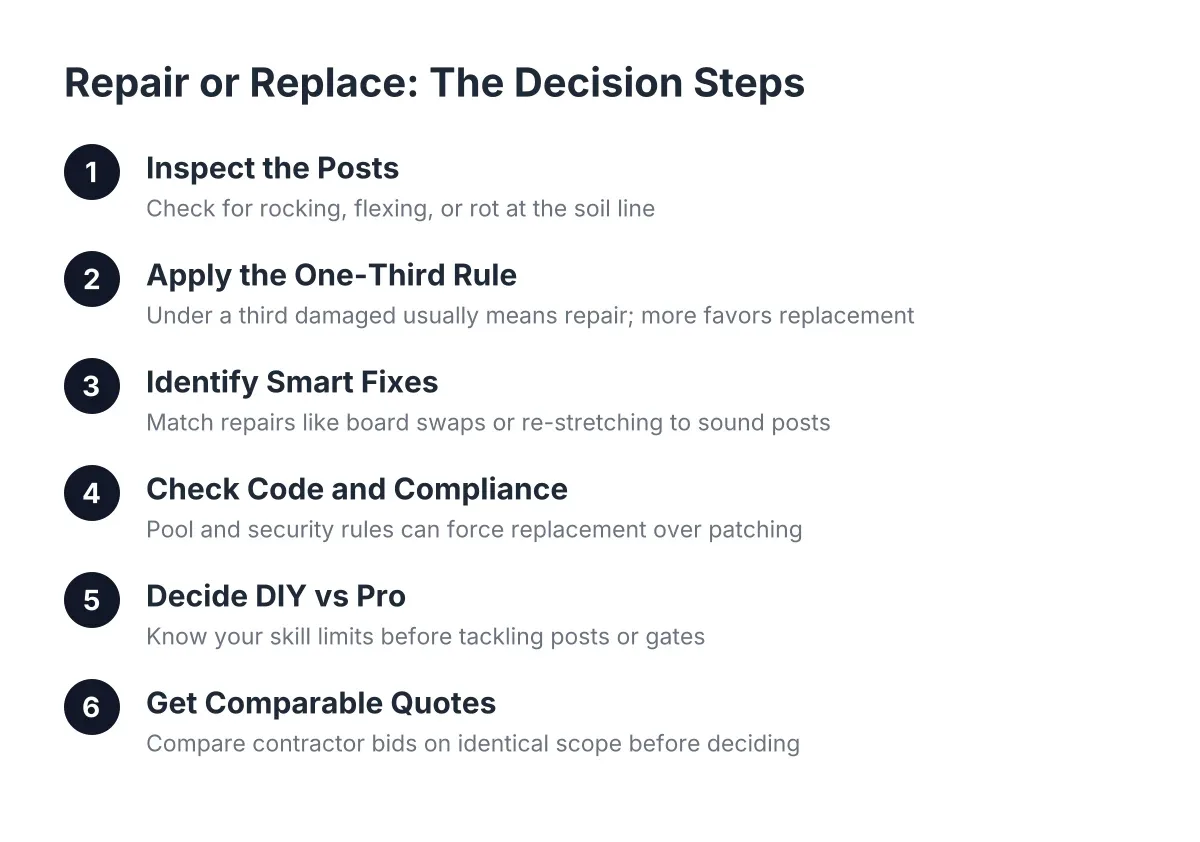
Warning signs that mean call now rather than later: a leaning line of posts after a storm, a gate that drags or no longer latches, cut or lifted chain link fabric at the bottom of the fence, and rust-through at post bases. Each of these is an open door to the problem the fence was built to prevent, and small fence repair now beats fence replacement later.
How to Compare Quotes and Choose a Contractor
Choosing among fence companies comes down to whether the quote explains itself. A fair commercial quote itemizes footage, material grade, post depth and footing size, gate hardware, permits, and what counts as an extra. A number on a napkin is a guess, and guesses turn into change orders.
Three questions separate serious contractors from the rest:
- "What gauge framework and what post depth are you quoting, and why?" The answer should reference your soil and wind exposure, not just a standard spec. Heavier end and gate posts at corners and openings are a sign the estimator thinks about load, not just footage.
- "Who pulls the permit, and what documentation do I get?" Commercial sites often need code documentation for insurers or landlords. Get a clear answer on paper.
- "What happens if you hit roots, buried debris, or water while digging?" The honest answer names a process and a unit cost for obstructions, agreed before digging starts. The evasive answer is "we'll figure it out."
For example, say a Bradenton self-storage operator gets three quotes for the same perimeter and gate. Two quotes are a single number. The third is longer and slightly higher, but it specifies commercial-grade posts, deeper footings for sand, a slide gate with a rated operator and photo eyes, and the permit included. In that scenario, the third quote is the only one the owner can actually evaluate, and it is usually the one that holds up when digging starts.
The same logic applies if you are a homeowner reading this while planning a first fence on a bare new-construction lot. Whether you search for a residential fence company near me, wood fence builders near me, or fence and gate installation near me, the test is identical: the right contractor explains the factors behind the number before asking for a signature. A detailed fence estimate protects both sides.
Getting Started on Your Perimeter
Securing a commercial property is a sequence, not a single decision. Define what the fence must do, match materials to those jobs and to Bradenton's sand, water table, and wind, then compare quotes that explain themselves. Owners who follow that order get a perimeter that still stands straight after its fifth storm season.
Manatee Fence Co handles commercial fence installation for Bradenton businesses, including chain link perimeters, privacy fencing, and automatic gate installation, along with fence repair and fence replacement when an existing perimeter fails. We walk the site, explain the cost factors in plain language, and put the full scope in writing before any digging starts. If your lot needs securing, or an insurer or lease has put a deadline on it, reach out for an estimate and we will talk through the options for your specific property, serving Bradenton and the surrounding area.
If you need fence installation in Bradenton, FL, Manatee Fence Co can help.
Prefer to talk it through? Call (941) 219-6611 — a quick call is usually the fastest way to get a straight answer for your situation.