8 Vinyl Fence Problems in Florida: How to Prevent and Fix Each One
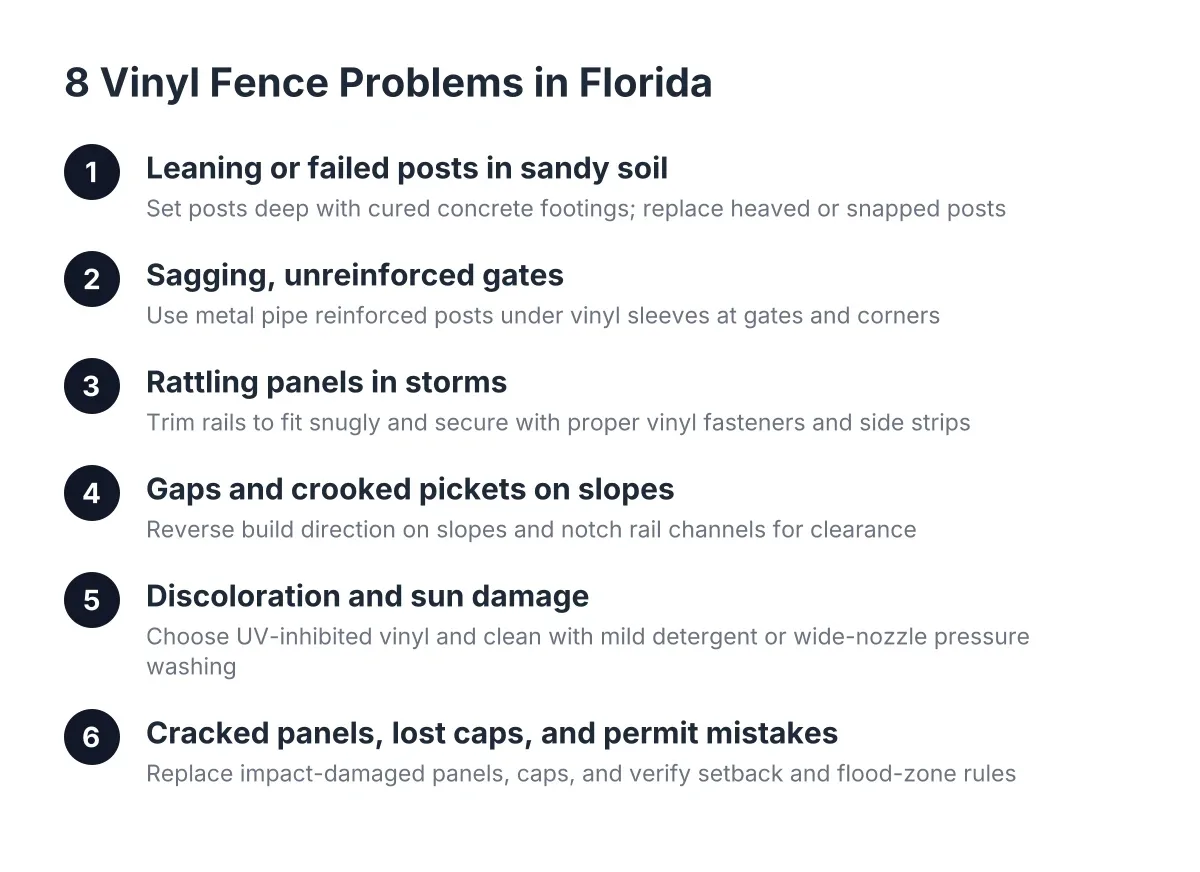
Most vinyl fence problems in Florida trace back to how the fence was installed, not the material itself. Vinyl resists rot, termites, and fading better than wood fencing, which is why so many Bradenton property owners choose it. But sandy soil, high water tables, and storm-season wind punish shortcuts. Set the posts wrong, skip the reinforcement at a gate, or ignore drainage, and a fence that should last decades starts sagging within a few summers.
This list covers the eight vinyl fence problems we see most often around Bradenton, what causes each one, how to prevent it during installation, and what can realistically be fixed after the fact. Whether you hired vinyl fence installation services or you are evaluating a fence that came with the property, this is the checklist to work through.
Common Vinyl Fence Problems in Sandy Soil and How Posts Fail
Posts are the foundation of a vinyl fence. The panels only stay straight if the posts stay plumb, and Bradenton's sandy, low-lying lots give posts less to grab than clay or rocky soil does. When a post starts leaning, every panel attached to it follows.
Prevention comes down to depth and concrete. Posts need to be set deep enough for the soil conditions, with properly mixed concrete footings that cure before panels go on. On lots with a high water table, the hole may fill with groundwater during digging; an experienced crew knows how to work around that rather than pouring concrete into a slurry and hoping.
The fix depends on how far gone the post is. A slightly leaning post can sometimes be excavated, re-plumbed, and re-set. A post that has heaved or snapped at grade usually needs full replacement, which means detaching the adjacent panels first. This is one repair where doing it halfway just moves the problem down the line.
2. Sagging Gates That Were Never Reinforced
A vinyl gate is the hardest-working section of the fence, and it fails first when the gate posts are standard hollow line posts. Hollow vinyl flexes under the constant load of a swinging gate. Within a year or two, the gate drags, the latch stops catching, and the whole corner looks tired.
The prevention is simple: gate posts and heavy-load end posts should be reinforced. One proven approach uses a metal pipe set in concrete with the vinyl post sleeved over it, so the vinyl is the finish and the steel does the structural work. Heavy-duty end posts with thicker walls serve the same purpose at corners and terminations.
If you plan to automate the gate later, this matters twice as much. A motorized gate opener puts repeated mechanical stress on the hinge post, and an electric gate operator cannot compensate for a post that moves. If you are a commercial property owner thinking about controlled vehicle access, tell your installer during the fence estimate so the gate posts, power routing, and opener mounting get planned together rather than retrofitted.
3. Panels That Rattle, Shift, or Blow Out in Storms
Loose panels are one of the most common problems with vinyl fences in wind-exposed areas, and storm season finds every weak connection. Rails that were never cut to fit snugly between posts, or that were seated without proper fasteners, work loose a little more with every gust.
During installation, rails should be trimmed so they fit tight in the post pockets and then secured with the screws made for vinyl fence systems, not whatever is in the truck. Grooved pickets need side strips on the posts to lock them in place once the rails are set. Skipping those strips is a classic shortcut that shows up the first time a tropical system pushes through Manatee County.
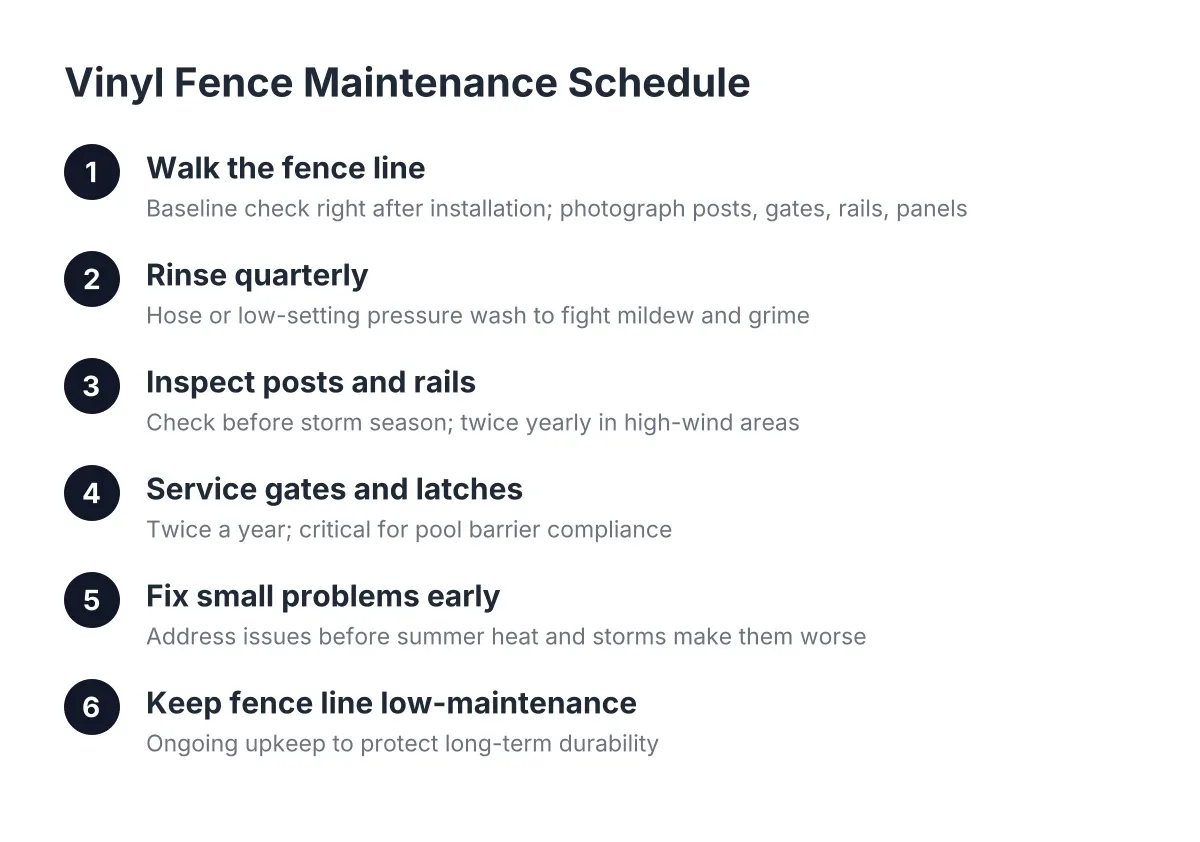
After a storm, walk the fence line. A popped rail or a dislodged picket can often be re-seated and secured the same day. A panel that blew out completely usually signals a connection failure you should fix properly, because the next storm will find the same spot.
4. Gaps and Crooked Pickets on Sloped Ground
Slopes cause more installation headaches than flat ground ever will, and bad slope work is obvious from the street. Pickets slide downhill as they are inserted, leaving uneven gaps, or they refuse to seat fully into angled rails and sit proud of the panel.
Experienced installers have answers for both. On a sloped run, the crew can reverse the direction they build the panel so gravity works with them instead of against them, keeping pickets tight as each one goes in. When a picket will not seat into an angled rail, it is hitting the inside wall of the rail channel; trimming the picket or notching the channel gives it the clearance to drop home.
This is one area where DIY vinyl fence installation goes sideways fast. The materials are the same, but the slope techniques are learned on real jobs. If your Bradenton lot grades toward a drainage swale or retention area, ask the installer how they plan to handle the transition before the first post is set.
Vinyl Fence Problems With Discoloration and Sun Damage
Florida sun and humidity test every fence material, and vinyl is no exception. The honest cons of vinyl fencing include mildew staining on shaded north-facing runs, a chalky surface on cheap panels after years of UV exposure, and the fact that PVC is still plastic; it will not rot, but it can burn in extreme conditions like a wildfire.
Prevention starts with material choice. Quality vinyl formulated with UV inhibitors holds its color far better than bargain panels, and the difference shows up by year five, not year fifteen. Lighter colors also hide chalking and mineral spotting better than dark tones in intense sun.
The fix for most discoloration is maintenance, not replacement. Mildew and algae wash off with a soft brush, mild detergent, and a garden hose. Pressure washing works too if the nozzle stays wide and the pressure stays moderate. Deep UV degradation that leaves the surface brittle, however, cannot be cleaned away; those panels are candidates for replacement.
6. Cracked or Shattered Panels From Impacts
Vinyl is flexible up to a point, then it cracks. Mower debris, a thrown trailer hitch, a delivery truck cutting the corner of a commercial lot; all of it can punch through a panel. Older, sun-stressed vinyl cracks more easily because UV exposure makes it brittle over time.
One advantage of a properly installed vinyl fence is that it is a system of parts, not a monolith. Knowing how to repair a vinyl fence usually means swapping components: a single picket pops out and a new one pops in, a cracked rail gets cut to length and replaced, a damaged panel comes out without touching its neighbors. Vinyl fence repair costs stay manageable when the damage is contained to replaceable parts, which is a real advantage over patching wood.
The catch is matching. Vinyl profiles and colors vary by manufacturer, and a ten-year-old fence may not match today's stock exactly. Keeping a spare picket or two from the original vinyl fence installation makes future repairs invisible.
7. Post Caps That Pop Off and Disappear
Missing post caps look minor until rainwater starts collecting inside hollow posts and the fence line looks snaggletoothed. Caps that were set on dry, or tapped on with no adhesive, lift off in the first strong wind.
The prevention takes thirty seconds per post. PVC glue applied inside the cap before it is placed creates a sealed, permanent bond that storms will not break. A crew that glues caps as standard practice is a crew that sweats the other details too; it is a small tell worth watching for during installation.
If your caps are already scattered across the yard, replacements are inexpensive and easy to glue on yourself. Just confirm the profile size first, since post dimensions vary between fence lines.
8. Permit, Setback, and Flood-Zone Mistakes
Not every vinyl fence problem is physical. In the Bradenton area, fences built without permits, set over property lines, or placed inside flood-zone and easement setbacks create expensive paper problems. A fence that has to come down because it sits two feet into an easement is a total loss no repair can fix.
Before installation, confirm three things:
- The property line, ideally from a survey rather than an old fence line or a neighbor's memory
- Local permit requirements and height limits for your parcel, which differ for residential and commercial properties
- Any flood-zone, drainage, or utility easement setbacks that restrict where posts can go
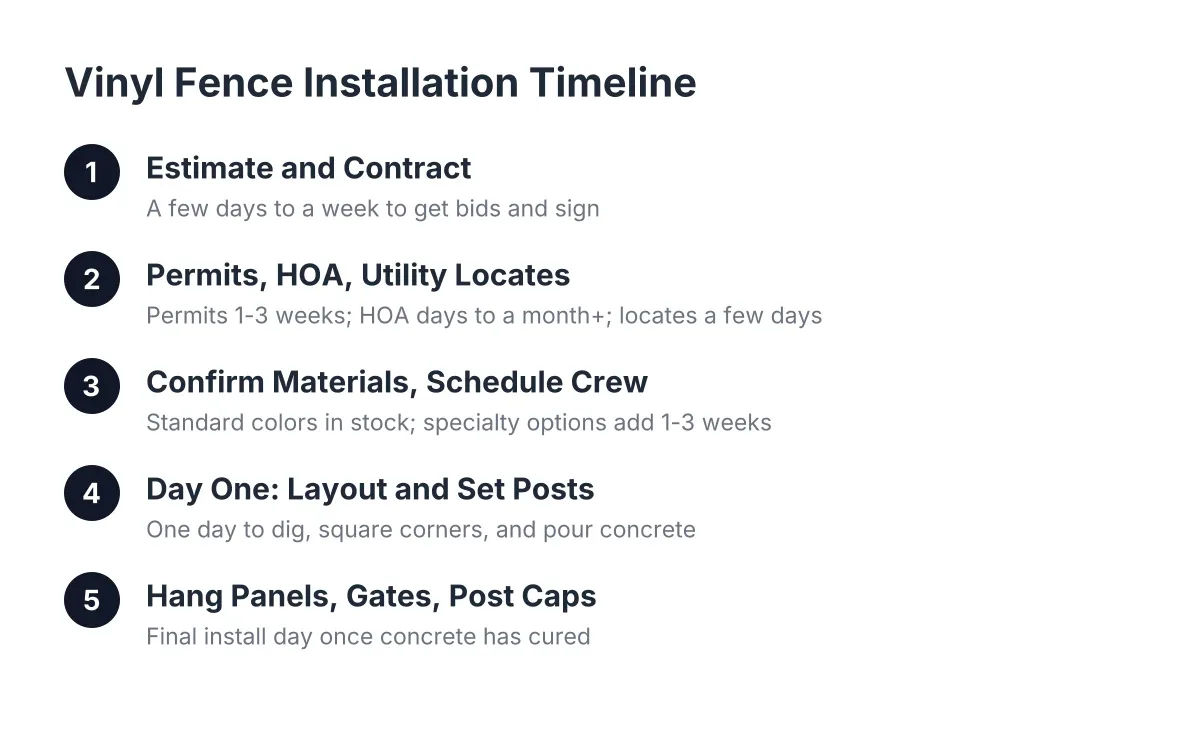
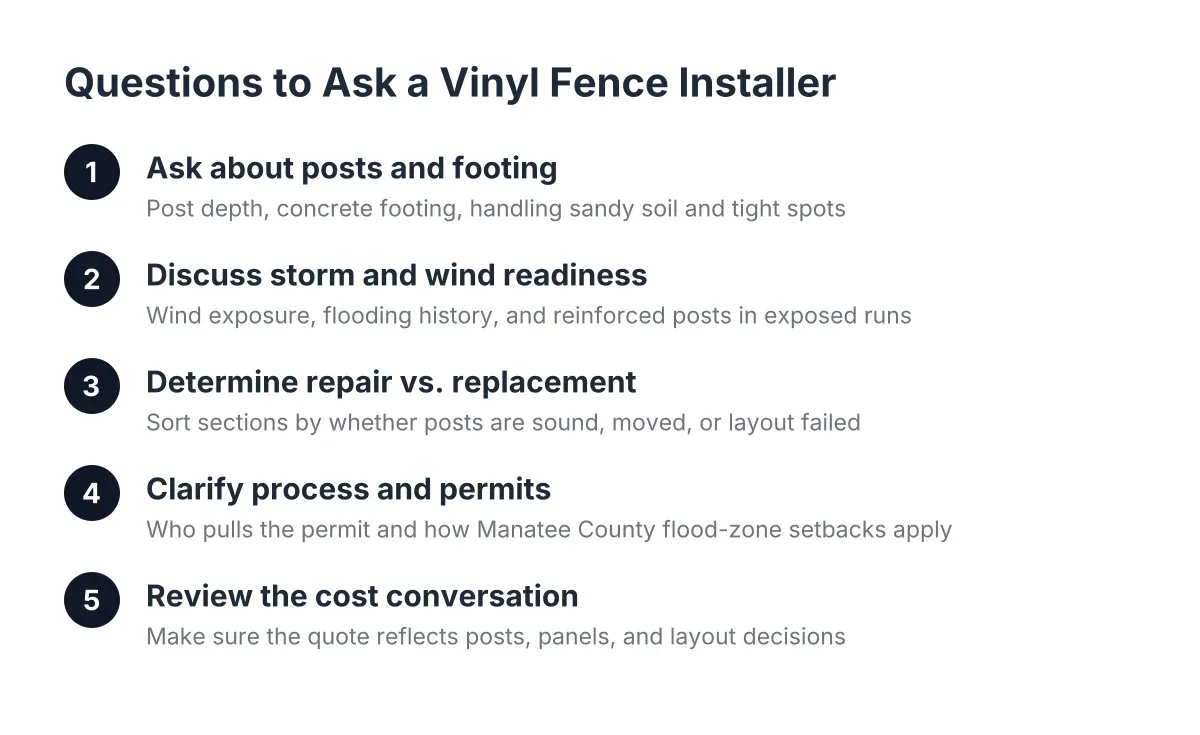
Commercial owners should take this doubly serious in 2026, since perimeter fencing tied to an insurance or lease requirement often needs documentation that the work was permitted and built to spec. A reputable local installer handles the permitting conversation up front; if a contractor shrugs it off, that is your sign to keep searching for vinyl fence installation near me until you find one who does not.
When to Repair, When to Replace, and When to Call a Pro
Most individual failures on this list are repairable: a picket, a rail, a cap, even a single post. Replacement makes more sense when the problems are systemic, meaning multiple leaning posts, widespread brittleness, or a fence that was set shallow across its whole length. Illustratively, suppose a contractor-yard owner in Bradenton finds three leaning posts and a dragging gate after one storm season; in that scenario, patching panels one at a time costs more over two years than resetting the run correctly once.
There are also real limits to DIY. Post excavation near buried utilities, gate posts that will carry an automatic gate opener, and anything involving flood-zone setbacks are jobs where a professional protects you from problems you cannot see yet. For context on overall budgets, fence installation averages $3,277 nationally according to Angi, with vinyl running $15 to $40 per linear foot; your actual fence cost depends on length, terrain, gate hardware, and site conditions, which is exactly why a site-specific fence estimate beats any national number.
The pattern across all eight problems is the same. Vinyl fencing performs well in Florida when the posts are set for the soil, the hardware matches the system, and the layout respects the lot. Get the installation right, and the list above becomes someone else's article.
If you need vinyl fence installation, Manatee Fence Co can help.
Prefer to talk it through? Call (941) 219-6611 — a quick call is usually the fastest way to get a straight answer for your situation.