Vinyl Fence Installation Maintenance in Florida: A Season-by-Season Plan
Your new vinyl fence is in the ground. Now the question is how to keep it looking and performing the way it did on day one. Vinyl fence installation maintenance in Florida is different from what you would do up north, and staying on top of a vinyl fence maintenance schedule is key to protecting your investment. Here in Bradenton, the sun is harsher, the humidity feeds mildew year-round, and storm season puts real wind load on panels and gates. This guide walks you through a season-by-season routine, step by step, so your PVC fence lasts as long as the material allows.
Vinyl resists rot and fading far better than wood fencing, but it is not maintenance-free. It still needs cleaning, inspection, and small adjustments to stay square, white, and secure. Whether you fenced a commercial lot off Cortez Road or installed a pool enclosure to pass inspection, the steps below apply.
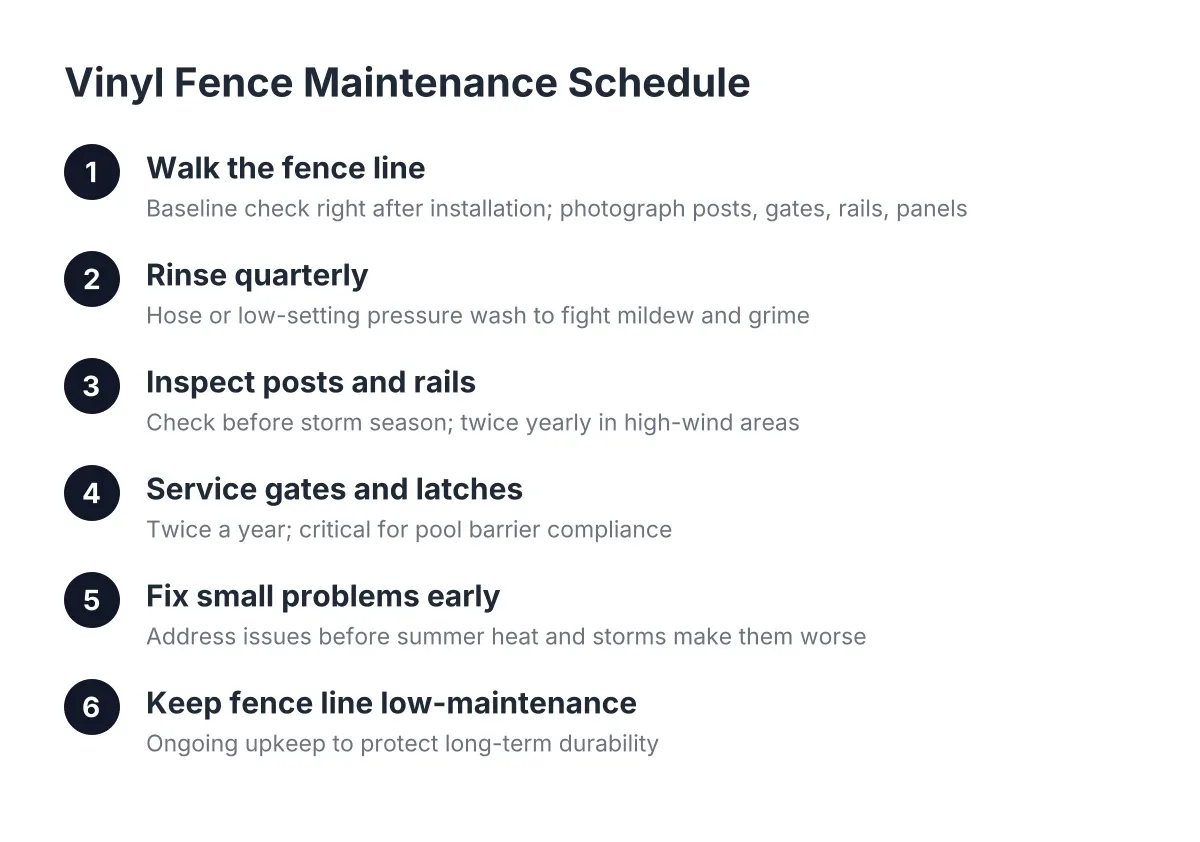
Step 1: Walk the Fence Line After Installation Is Complete
Start your maintenance routine the week your fence installation wraps up, not a year later. A fresh fence gives you a baseline. Walk the full line and note how everything looks and feels while it is new.
Check these items and write them down or photograph them:
- Post caps are glued and seated flat on every post
- Gates swing freely and latch on the first try
- Rails sit snug in their post routes with no visible gaps
- Panels run straight, with slopes stepped or racked cleanly
- Soil around each post is packed and graded away from the concrete
Those photos matter later. If a panel shifts after a storm or a gate sags in month eight, you can compare against the baseline and show your installer exactly what changed. For a commercial property manager, that record also helps when you report fence condition to an ownership group or document it for a lease requirement.
Step 2: Rinse the Fence Quarterly to Fight Mildew and Grime
Florida humidity grows green and black mildew on vinyl faster than most owners expect, especially on the shaded north side of a run. Therefore, put a quarterly rinse on the calendar as part of your vinyl fence maintenance schedule. A garden hose with a spray nozzle handles most of it.
For stubborn spots, mix mild dish soap in a bucket of water and scrub with a soft brush or sponge. Rinse top to bottom so dirty water does not streak dry on clean sections. Avoid abrasive pads, steel wool, and harsh solvents; they scratch the surface and dull the finish, which gives the next round of mildew more texture to grip.
A pressure washer works if you keep it on a low setting and hold the wand at an angle, several feet back. Blasting straight at panel joints can force water and debris into the rail routes. When in doubt, the hose and brush are safer.
Step 3: Inspect Posts and Rails Before Storm Season
Posts are the foundation of a vinyl fence system. The panels only stay straight because the posts hold them there. In Bradenton, sandy soil and a high water table mean post footings do more work than they would in dense clay, so check them every spring before storm season arrives.
Grab each post near the top and push gently. Line posts should feel solid with no rocking at the base. Pay extra attention to end posts, corner posts, and gate posts; these carry more load, which is why they are built thicker than standard line posts in a quality install. In addition, look at the soil around each footing. Sandy lots can wash out during heavy summer rain, exposing the top of the concrete.
Next, check the rails. Rails are cut to fit snug between posts and locked in place, so a rail that has slipped out of its route usually means the post moved or a locking tab failed. Catching a loose rail in May is a small fix. Finding it after a tropical system has worked the panel back and forth for six hours is a bigger one.
Wind Exposure and Your Vinyl Fence Maintenance Schedule
Wind is the main force working against a privacy fence in this area. Solid vinyl panels act like a sail, so any post that is already loose will get worse with each storm. As a result, fences on open lots, near the water, or along wide commercial frontage need the post check twice a year instead of once. A chain link fence lets wind pass through; a solid PVC fence does not, and your inspection habits should reflect that.
Step 4: Service Gates and Latches Twice a Year
Gates fail before panels do, because gates have moving parts. Twice a year, open and close every gate and watch what happens. The gate should swing without dragging, close under its own spring tension if it is self-closing, and latch without you lifting or shoving it.
For pool owners, this step is not optional. Florida pool barrier rules require self-closing, self-latching gates, and an inspector or insurance carrier can flag a gate that no longer closes on its own. Say a homeowner in Bradenton passed their pool inspection in March; by October, salt air and daily use have weakened the spring hinge tension, and the gate now stops an inch short of latching. In that scenario, a hinge adjustment takes ten minutes. An insurance claim after an incident does not.
Work through this checklist at each gate:
- Tighten hinge screws and latch hardware with a hand screwdriver, not a drill, to avoid stripping the vinyl.
- Adjust self-closing hinge tension so the gate latches from a halfway-open position.
- Wipe salt film and grit off stainless hardware, then apply a light silicone lubricant to moving parts.
- Confirm the latch release sits at the height your pool code requires, and that nothing nearby gives a child a foothold to reach it.
If you have an automatic gate on a commercial lot, add the operator to this routine. Clear debris from the track or hinge area, test the safety reverse function, and listen for motor strain. Electric gate operators on business properties cycle far more often than residential ones, so small problems compound quickly.
Step 5: Fix Small Vinyl Fence Problems Before Summer Makes Them Big
Minor vinyl fence issues rarely stay minor through a Florida summer. Afternoon heat expands the material, storms flex it, and irrigation keeps the base of the fence wet. Handle these common problems as soon as you spot them:
- A popped post cap. Re-glue it with PVC cement inside the cap so rain stops draining into the hollow post.
- A loose or sliding picket. On sloped runs, pickets can creep downhill over time if the panel was not assembled to resist it. Reseat the picket and check the top rail lock.
- A cracked picket or rail. Replace the single component; one advantage of professional vinyl fence installation is that panels come apart and individual pieces swap out without rebuilding the section.
- Scuffs and marks. Most wipe off with soapy water. A melamine sponge handles tougher marks without scratching.
However, know where the line is. A leaning gate post, a footing heaving out of sandy soil, or storm damage across multiple panels calls for a fence repair professional. Digging and resetting a post next to a pool deck, a property line, or buried utilities is not a good weekend project, and a bad reset can throw off every panel attached to it.
Step 6: Keep the Fence Line Itself Low-Maintenance
The ground around your fence affects how much maintenance the fence needs. Therefore, manage the fence line, not just the fence.
Trim grass and shrubs back so string trimmers never contact the vinyl; repeated trimmer strikes at the base of pickets cause most of the chips and gouges owners later blame on the material. Redirect sprinkler heads that spray the fence directly, since constant irrigation water feeds mildew and leaves mineral spots. On commercial lots, keep pallets, equipment, and vehicles from leaning against panels; vinyl handles wind flex well but not constant point pressure.
Also watch grading. If you notice water pooling along the fence line after summer storms, address the drainage. Standing water saturates the soil around footings, and in low-lying Bradenton lots that is the slow path to a leaning post.
How Your Vinyl Fence Maintenance Schedule Shapes Long-Term Durability
Consistent vinyl fence maintenance is what separates a fence that looks tired in five years from one that still looks sharp in twenty. The material itself is durable; vinyl will not rot like wood posts eventually do, and it never needs painting or staining. What shortens its life is neglect at the system level: loose posts that storms work free, gates that sag until hinges tear out, and footings undermined by washout.
Vinyl is also a meaningful investment to protect. According to Angi, vinyl fencing runs between $15 and $40 per linear foot on average, which puts it above chain link for most layouts. A maintenance routine that costs you a hose, a brush, and a few hours a year is cheap insurance on that spend. For a business owner justifying the original fence cost to a partner or ownership group, a documented inspection log also shows the asset is being protected.
A One-Page Seasonal Schedule to Keep
Here is the full routine condensed into a calendar you can actually follow, serving Bradenton conditions specifically:
- Spring (before storm season): Full post and rail inspection, gate service, check footings for washout, first quarterly rinse.
- Summer: Quarterly rinse, quick walk-through after any named storm or severe thunderstorm, trim vegetation.
- Fall: Second gate service, re-check self-latching hardware on pool gates, quarterly rinse.
- Winter: Quarterly rinse, repair any chips or cracked components while demand on installers is lower, review your photo baseline.
Follow that cycle and the maintenance side of vinyl fence installation stays light, about a few hours per season for a typical residential lot, and your fence handles everything a Gulf Coast year throws at it. If an inspection turns up a structural issue, a leaning gate post, or storm damage you are not sure about, bring in a fence repair professional rather than guessing; an honest assessment costs little compared to a failed section during the next storm.
If you need vinyl fence installation, Manatee Fence Co can help.
Prefer to talk it through? Call (941) 219-6611 — a quick call is usually the fastest way to get a straight answer for your situation.