Vinyl Fence Installation Terms Explained: A Plain-English Glossary
If you are reading vinyl fence quotes and hitting words like "rackable panel" or "post footer," this vinyl fence installation glossary is for you. It covers the terms Bradenton homeowners run into when they research a vinyl fence, compare bids, or talk to an installer on the phone. Each entry gives you a plain definition first, then explains why the term matters for your project and your fence cost. Read it once and the next fence estimate you get will make a lot more sense.
- Vinyl (PVC): the plastic the fence is made of
- Panel: a pre-built fence section
- Post: the vertical anchor in the ground
- Rail: the horizontal piece panels lock into
- Picket: the vertical board inside a panel
- Post Cap: the lid on top of each post
- Privacy Fence: solid panels with no gaps
- Gate Kit: hardware that turns a panel into a gate
- Post Hole: the dug hole that holds each post
- Concrete Footer: the concrete that locks a post in place
- Setback: how far the fence must sit from a line
- Property Survey: the map of your exact lot lines
- Utility Locate: marking buried lines before digging
- Racking: angling panels to follow a slope
- Wind Load Rating: how much wind a fence is built to take
- Linear Foot: how fence length is measured and priced
- Permit: the city's written OK to build
- Tear-Out: removing the old fence first
Parts of a Vinyl Fence: Installation Glossary
These are the pieces an installer will name when walking your yard or writing a quote.
Vinyl (PVC)
Vinyl, also called PVC, is a rigid plastic used to build fences that never need paint or stain. It will not rot, and insects leave it alone, which matters in Bradenton's humidity where wood fencing works harder to survive. Quality varies, so ask about wall thickness and UV protection; thin vinyl can turn brittle or yellow under intense Florida sun. When a provider says "PVC fence," they mean the same thing as vinyl fence.
Panel
A panel is one pre-built section of fence that spans the space between two posts. Most vinyl fences are sold and installed panel by panel, so your quote often counts panels or the posts between them. Panel width affects how many posts your yard needs, and more posts mean more digging and concrete. If a panel gets damaged later, it can usually be replaced without rebuilding the whole run.
Post
A post is the vertical member set into the ground that holds the fence up. Posts carry the entire load of the fence, including wind pushing against it during storm season. How deep they go and how they are anchored matters more in sandy, low-lying Bradenton lots than almost anywhere else. If a quote seems cheap, ask how the posts are set; that is often where corners get cut.
Rail
A rail is the horizontal piece that runs between posts and holds the pickets or panel infill. Vinyl rails usually lock into routed holes in the posts, which keeps the fence rigid without visible screws. Bottom rails sometimes contain a metal stiffener for extra strength on long or wind-exposed runs. If an installer mentions "reinforced rails," they are talking about that metal insert.
Picket
A picket is one of the vertical boards inside a fence panel. On a privacy style, pickets sit tight together with no gaps; on a picket or semi-privacy style, they have space between them. Picket spacing changes how much the fence blocks views, wind, and noise. It also changes the look, so ask to see photos of the exact spacing before you sign.
Post Cap
A post cap is the fitted lid that covers the open top of each vinyl post. Caps keep rain out of the hollow post and finish the look of the fence. They come in flat, pyramid, and decorative styles, and some installers glue them on so they survive wind and curious kids. A missing cap is a small fix, but water sitting inside a post is worth avoiding.
Privacy Fence
A privacy fence is a solid fence, usually six feet tall, with no gaps between pickets. It is the most common vinyl style for backyards because it blocks sightlines completely. Solid panels catch more wind than open styles, which is why post depth and spacing matter for a privacy fence near the coast. Expect a privacy fence to cost more per foot than an open picket style because it uses more material.
Gate Kit
A gate kit is the set of hinges, a latch, and bracing hardware that turns a fence panel into a working gate. Gates are the hardest-working part of any fence, so hardware quality shows up fast. Self-closing hinges and lockable latches are common upgrades, and pool areas often require them by local rules. If you want a driveway gate that opens itself, that is a separate scope; ask about automatic gate installation instead of a standard gate kit.
The Installation Process: Vinyl Fence Glossary Terms
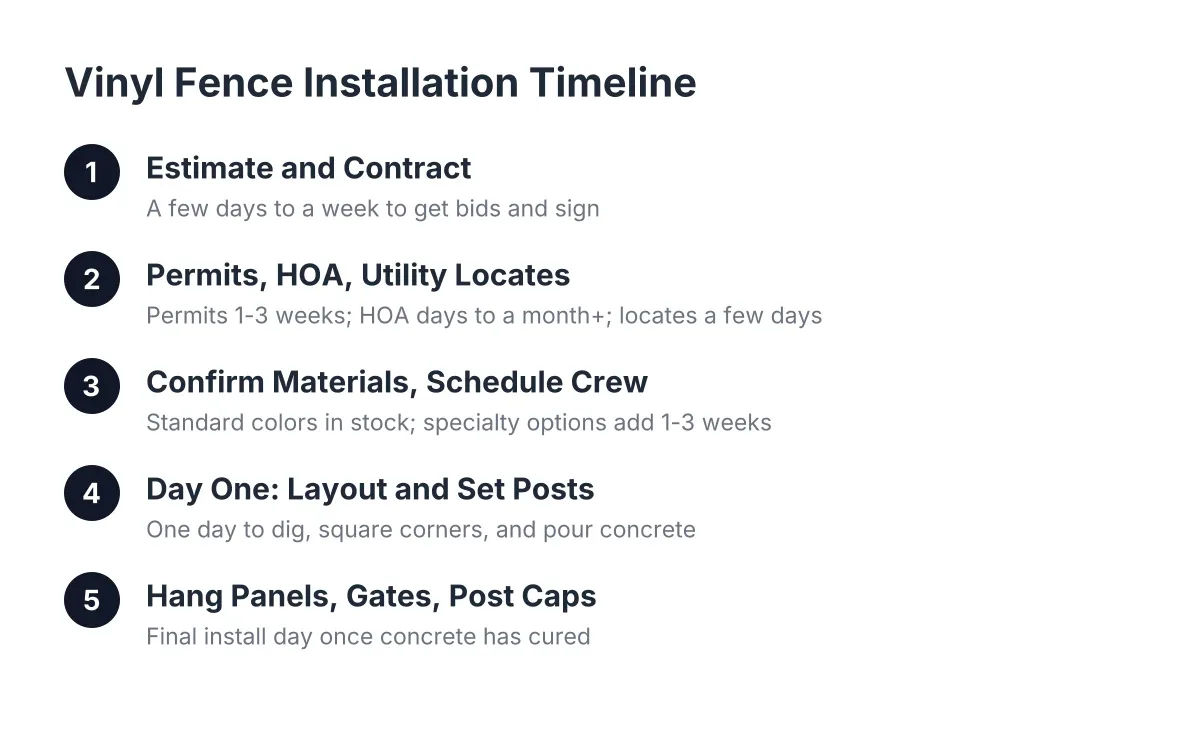
This part covers what happens between signing and walking your finished fence line. Knowing these steps helps you follow a crew's progress during vinyl fence installation and ask the right questions before digging starts. If you want the full step-by-step picture, see our Vinyl Fence Installation in Bradenton, FL page.
Post Hole
A post hole is the hole dug or augered into the ground to receive each fence post. Depth and width depend on fence height, soil, and wind exposure. Sandy Bradenton soil digs easy but holds poorly, so holes here often need to be deeper or wider than a northern how-to video suggests. A high water table can also mean the crew hits water while digging, which changes how the post gets set.
Concrete Footer
A concrete footer is the concrete poured around a post in its hole to lock it in place. The footer is what keeps your fence standing straight through storms and soggy ground. In loose or sandy soil, skipping concrete or skimping on it is a common cause of leaning fences a year later. If two quotes differ a lot, ask each company how they set posts; the answer often explains the gap.
Setback
A setback is the minimum distance a fence must sit from a property line, road, easement, or water feature. Local rules set these distances, and flood-zone lots in the Bradenton area can carry extra ones. Building inside a setback can force you to move or remove the fence later, at your cost. A good installer checks setbacks before quoting a fence line, not after.
Property Survey
A property survey is the official drawing that shows your exact lot boundaries and any easements. Fences built off a guess instead of a survey are a classic source of neighbor disputes. Many installers ask for your survey before they quote, and some permits require it. If you cannot find yours, your closing documents or the county records are the usual places to look.
Utility Locate
A utility locate is the process of marking buried gas, water, electric, and cable lines before anyone digs. In Florida, calling 811 before digging is the standard first step, and it is free to the homeowner. Hitting a buried line is dangerous and expensive, so no post hole should be dug before the locate is done. If a contractor shrugs this off, that is a warning sign.
Racking
Racking means angling fence panels so they follow a sloped yard without leaving gaps underneath. Rackable vinyl panels pivot at the rails to match the grade. The alternative is "stepping," where each panel stays level and the fence drops in stair steps down the hill. If your lot has any slope, ask which method the quote assumes, because it changes both the look and the labor.
Wind Load Rating
A wind load rating describes how much wind pressure a fence section is engineered to withstand. It matters in coastal Florida, where storm-season gusts test every solid privacy panel. Heavier-walled vinyl, reinforced rails, deeper posts, and tighter post spacing all raise what a fence can handle. A provider who brings up wind load unprompted is thinking about your fence surviving August, not just passing a final walkthrough.
Pricing and Paperwork
Linear Foot
A linear foot is a straight-line foot of fence length, and it is the standard unit for fence pricing. A quote priced per linear foot lets you compare bids on the same footing, as long as each bid covers the same height, style, and gate count. Total footage, gates, tear-out, and site conditions all move the number. For a plain breakdown of what drives the price up or down, read our guide to vinyl fence installation cost.
Permit
A permit is the written approval from your city or county to build the fence. Most Bradenton-area fence projects need one, and the rules cover height, placement, and sometimes material. Many fence companies handle the permit paperwork as part of the job; confirm whose responsibility it is in your contract. Building without a required permit can mean fines or tearing the fence out, so it is not a step to skip.
Tear-Out
Tear-out means removing and hauling away your existing fence before the new one goes in. It is usually a separate line on a quote because it adds labor, disposal fees, and sometimes surprises like concrete-filled old post holes. If your quote does not mention tear-out and you have an old fence standing, ask before you sign. Fence replacement bids should always state clearly who removes the old material and where it goes.
Using These Terms
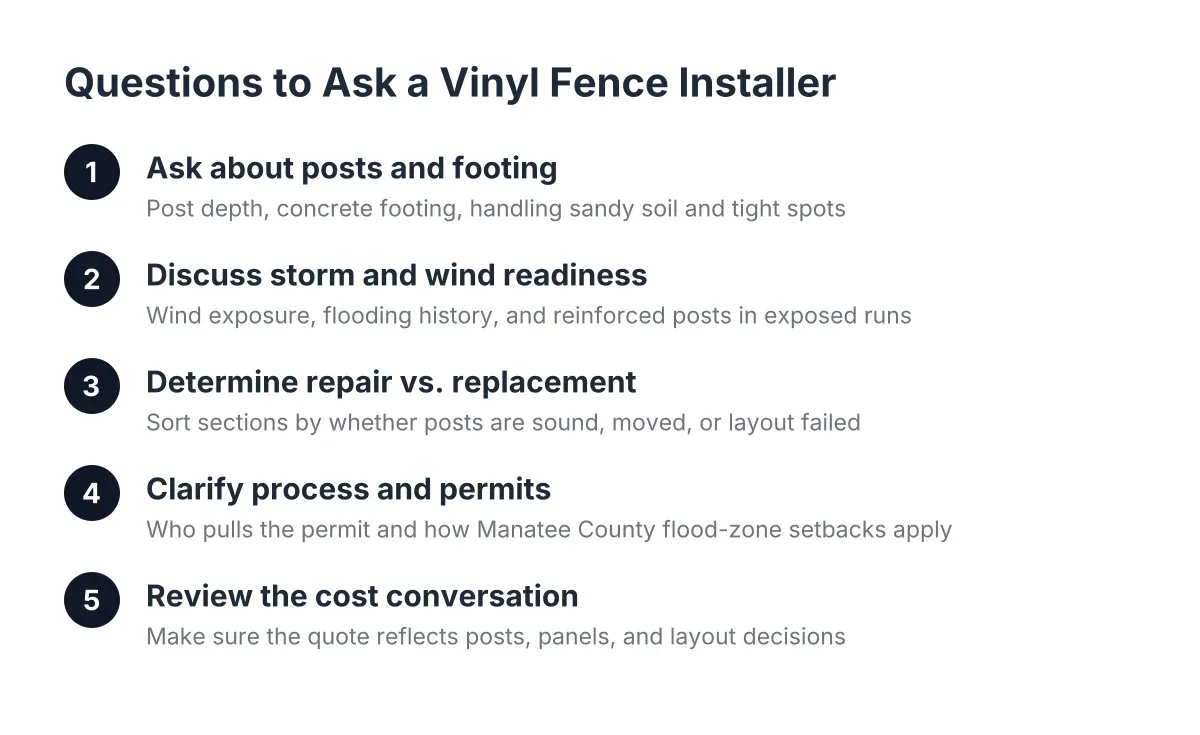
What this vinyl fence installation glossary gives you is the ability to read a quote line by line instead of skimming to the total. You can now ask how deep the posts go, whether the panels rack to your slope, and who pulls the permit. Those are the questions that separate a fence that lasts from one that leans by next summer, and any honest installer serving Bradenton will be glad you asked them.
Prefer to talk it through? Call (941) 219-6611 — a quick call is usually the fastest way to get a straight answer for your situation.