Wood Fence vs. Vinyl vs. Chain Link: Lifespan and Maintenance Compared
You picked a fence company, or you are close to picking one. Now comes the choice that shapes your yard for the next 10 to 30 years: wood fence, vinyl, or chain link. Each one holds up differently in Bradenton's sun, humidity, and sandy soil, and each one asks a different amount of work from you after install day. This guide walks you through the fence lifespan comparison step by step, so you can tell your installer exactly what you want and why.
This is written for the homeowner standing in a bare new-construction yard, dog circling an open lot, maybe with a pool inspection date on the calendar. Follow the steps in order. By the end, you will know which material fits your lot, your HOA, and your tolerance for maintenance.
Step 1: Compare Wood Fence, Vinyl, and Chain Link Lifespans Honestly
Start with how long each material actually lasts here, not in a national brochure. Bradenton's intense sun, humidity, and salt air age fencing faster than milder climates, and the weak point is rarely the part you look at every day.
Here is the honest picture for a wood fence, vinyl, and chain link in this climate:
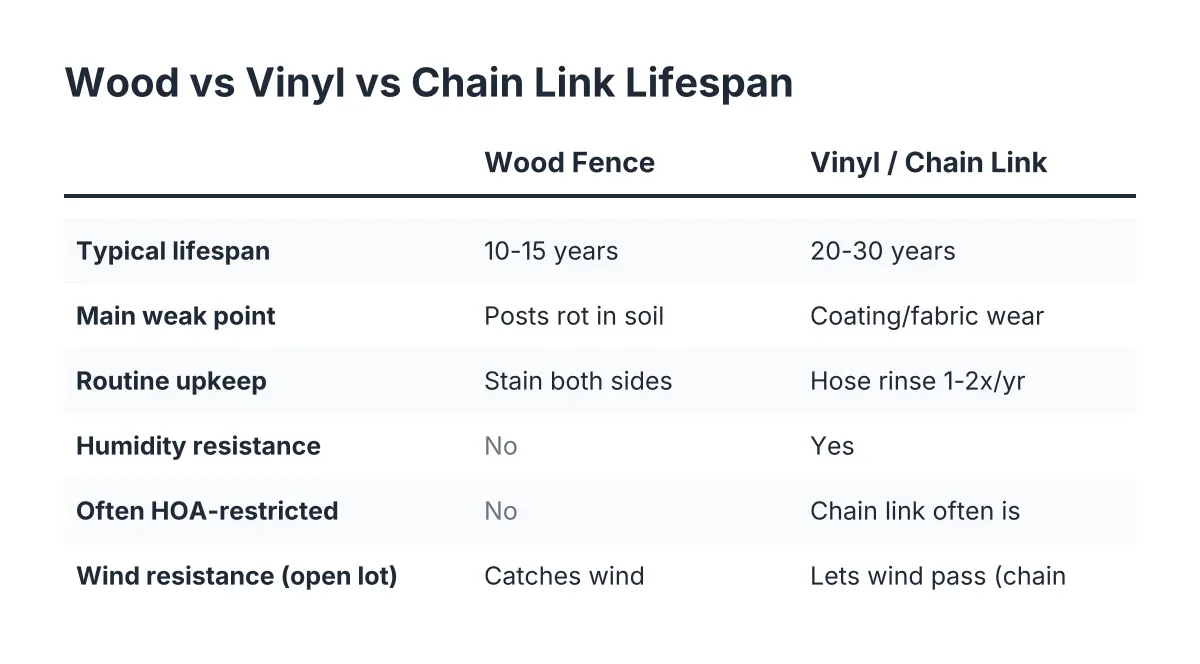
- Wood fencing: Often 10 to 15 years with care, less without it. The panels usually outlast the posts. Posts sit in damp, sandy soil and rot from the ground line down, even when the boards above have been repainted again and again. Warping and twisting show up early in full-sun yards.
- Vinyl fence (PVC fence): Commonly 20 to 30 years. Vinyl resists rot and fading far better than wood. It is still plastic, so it can crack under hard impact and will burn in extreme conditions like a fire, but it does not feed termites or soak up humidity.
- Chain link fence: Often 20 years or more. Galvanized or vinyl-coated chain link shrugs off humidity better than bare wood. Coastal salt air can shorten the life of cheaper, thin-gauge fabric, so coating and gauge matter more here than inland.
Therefore, if your main goal is the longest service life with the least attention, vinyl and coated chain link lead. Wood wins on warmth and looks but asks for the most from you.
Step 2: Be Honest About the Maintenance You Will Actually Do
Next, match the material to your habits, not your intentions. Every fence estimate looks different once you add up a decade of upkeep.
Wood fencing needs staining or sealing on a regular cycle, and the detail most homeowners skip is the one that matters: stain both sides, not just the side facing your yard. Sealing both faces keeps moisture from working into the boards from the neighbor's side and meaningfully extends the fence's life. Skip it, and you pay for the shortcut later in fence repair or early fence replacement.
Vinyl asks for a rinse. Bradenton humidity grows mildew on the shady side of a PVC fence, so plan on washing it with a hose and mild soap once or twice a year. That is the whole job.
Chain link needs the least routine care of the three. Check the fence ties that hold the fabric to the framework every year or two, since loose ties let the fabric sag. If you chose a vinyl-coated chain link fence, inspect for coating nicks where bare steel could rust.
For example, suppose a new-build homeowner in a Bradenton subdivision installs a wood privacy fence and never stains it. In this climate, that fence can look tired in five years and need post repairs not long after. The same homeowner with vinyl spends an hour a year with a garden hose. That gap is the real cost difference in a fence lifespan comparison, not the quote.
Step 3: Fence Lifespan Comparison Across HOA Rules and Pool Code
Before you approve a layout, pull two documents: your HOA's architectural guidelines and, if you have or are building a pool, your county's pool barrier requirements.
Many newer Bradenton-area HOAs restrict chain link in front-facing or visible areas and spell out approved colors and heights for wood and vinyl. Getting written HOA approval before install day prevents the worst outcome, which is tearing out a finished fence.
If a pool inspection is driving your timeline, the barrier rules shape the design more than the material does. As of 2026, Florida pool barrier requirements generally call for a minimum barrier height, limited gaps a child could pass through, and gates that are self-closing and self-latching with the latch mounted out of a small child's reach. All three materials can be built to comply. Tell your installer up front that the fence must pass a pool barrier inspection, so the gate hardware, picket spacing, and height are specified correctly from the first drawing. Local rules vary, so confirm the specifics with your county or a licensed installer rather than relying on a general article.
Step 4: Match the Material to Your Lot, Not Just Your Budget
Now walk your actual yard with each material in mind. Bradenton lots bring conditions that change the right answer.
Sandy soil and a high water table mean posts need proper depth and concrete to stay plumb. This matters most for wood, since a wood post in damp sand is the first thing to fail. Vinyl posts are the foundation of a vinyl fence system; the panels are only as strong as the posts holding them, which is why corners and ends use heavier, thicker posts than the line runs.
Wind exposure matters too. A solid privacy fence catches storm wind like a sail, while chain link lets wind pass through. On an open, exposed lot, that difference shows up in how the fence survives storm season. A good crew compensates with deeper posts and tighter post spacing on solid fences, and in tricky spots, such as butting against a neighbor's fence or working around a tree, they can sleeve a vinyl post over a steel pipe for reinforcement.
In addition, flag your irrigation lines, and ask the installer how they handle utility locates. This is the step that prevents the surprise change-order new-build owners worry about. A crew that walks the lot, asks about sprinklers, and checks flood-zone setbacks before quoting is giving you a real number, not a guess.
Step 5: Weigh Wood, Vinyl, and Chain Link Fence Costs Over the Full Lifespan
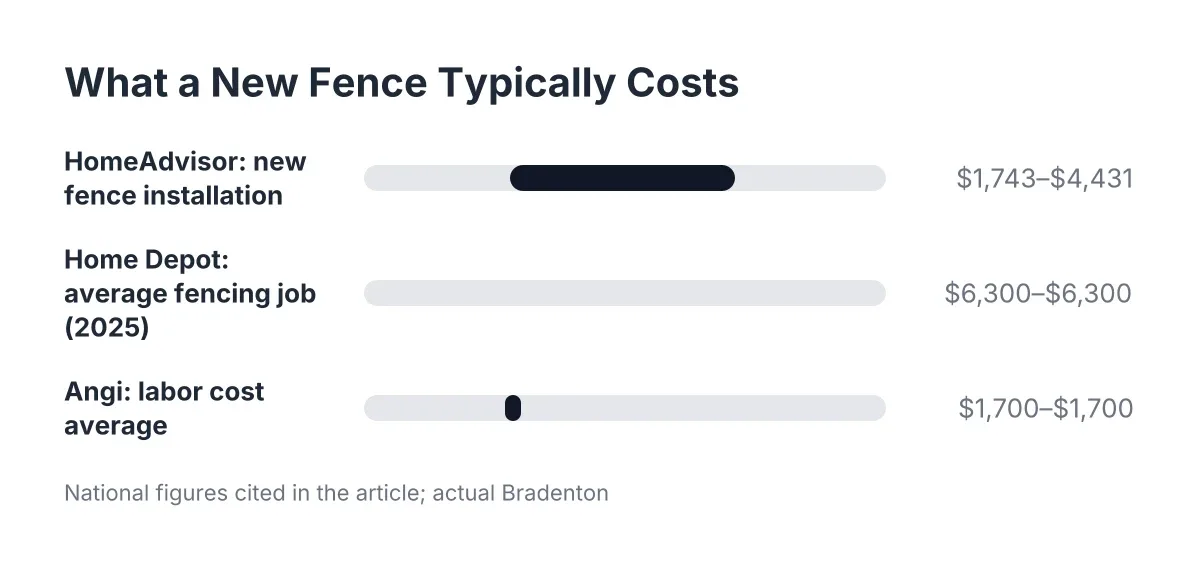
Compare total cost over the fence's life, not just the install quote. For context, Angi reports fence installation averages $3,277 nationally, ranging from roughly $1,860 to $4,843 depending on length and material. According to HomeAdvisor, chain link runs about $1,650 to $8,300 installed, and Angi puts vinyl at $15 to $40 per linear foot on average. Your Bradenton number depends on your yard, but the pattern holds: chain link usually costs least upfront, wood sits in the middle, and vinyl costs more on day one.
However, flip the order for long-term cost. Vinyl's higher upfront price buys decades with almost no upkeep spend. Wood's lower price comes with staining costs every few years and a shorter life before fence replacement. Chain link is cheap to install and cheap to own, but it offers no privacy without added slats or screening.
One more pattern worth knowing: the cheapest bid is often the most expensive fence. Pricing reflects post depth, material grade, hardware quality, and build style, not just lumber and labor. A bargain fence that needs rebuilding in seven years costs more than a solid one that lasts twenty. When comparing residential fence builders near me, ask each bidder to explain what is behind their number.
Step 6: Set Up Your Chosen Fence to Last From Day One
Finally, protect the investment in the first year. A few habits at the start add years at the end.
- Wood: Schedule the first stain or seal after the lumber dries out, and coat both sides. Keep sprinkler heads from spraying the boards daily; constant wetting is what rots wood fencing fastest.
- Vinyl: Walk the line after the first big storm and check that posts are plumb and caps are seated. Rinse off mildew before it stains.
- Chain link: Snug any loose fence ties, keep vines off the fabric, and touch up coating scratches near the coast.
- Gates, all materials: Test self-closing and self-latching hardware monthly if the gate protects a pool. Hinges and latches wear out before fence panels do, and a gate that does not latch is a code failure waiting for an inspection.
If you are also planning automatic gate installation for a driveway, have the fence installer and gate installer coordinate post placement early. An electric gate needs power and solid mounting posts, and it is cheaper to plan that during fence installation than to retrofit it.
The wood fence versus vinyl versus chain link decision comes down to a trade: wood gives the classic look for the most ongoing work, vinyl gives the longest low-effort life for the highest upfront price, and chain link gives durable, affordable containment with no privacy. Searching wood fence installation near me or privacy fence installation near me will surface plenty of options; the installer worth hiring is the one who walks your lot, explains what drives the price, and specs the fence for Bradenton's sand, sun, and storms instead of quoting from the truck.
If you need fence installation, Manatee Fence Co can help.
Related guide: fence company — Complete Guide
Prefer to talk it through? Call (941) 219-6611 — a quick call is usually the fastest way to get a straight answer for your situation.