Fence Company Terms Explained: A Plain-English Glossary
If you are getting fence quotes in the Bradenton area and keep running into words you half understand, this page is for you. This page explains the terms that show up in estimates, phone calls, and site visits in plain English, covering what a fence company glossary should include. Use it to read a quote line by line, ask sharper questions, and spot gaps before you sign anything. Each entry stands on its own, so you can skim to the word that confused you and move on.
- Fence Estimate: the written price breakdown you should get
- Linear Foot: how fence length gets measured and priced
- Post Setting: how posts get anchored in the ground
- Gate Hardware: hinges, latches, and locks on your gate
- Automatic Gate Operator: the motor that opens an electric gate
- Privacy Fence: a solid fence that blocks the view
- Picket: the vertical boards on a wood fence
- Rail: the horizontal supports pickets attach to
- Vinyl Fence (PVC Fence): plastic fencing that resists rot
- Chain Link Fence: woven wire fencing on metal posts
- Pressure-Treated Wood: lumber treated to resist rot and insects
- Gauge: the thickness of chain link wire
- Property Survey: the document showing your true lot lines
- Setback: the required distance between fence and boundary
- Permit: official approval before fence installation
- Easement: a strip of your land others can access
- Grade: the slope of your yard, and how fences handle it
- Fence Replacement vs. Fence Repair: fixing sections versus starting over
Materials and Fence Types
These are the words a fence company uses to describe what your fence is made of and how it is built. Materials matter more in Bradenton than in many places, because intense sun, humidity, and storm-season wind punish some choices harder than others.
Fence Company Glossary: Privacy Fences and Pickets
A privacy fence is a solid fence, usually six feet tall, built with no gaps so neighbors and passersby cannot see through it. Most privacy fences are wood or vinyl. Solid panels catch more wind than open styles, which matters during Florida storm season, so post depth and spacing deserve extra attention on a privacy fence. If you want privacy and lower wind load, ask your installer about styles with small gaps between boards.
A picket is one of the vertical boards or slats attached to the face of a wood or vinyl fence. Picket width, spacing, and style set the look of the fence and affect how much material the job needs. When a quote mentions "board on board" or "shadowbox," it is describing how the pickets overlap, which changes both privacy and cost.
Rail
A rail is a horizontal board that runs between posts and holds the pickets in place. Most residential wood fencing uses two or three rails per section. A third rail adds cost but stiffens the fence, which helps in windy, exposed yards. If an older fence sags between posts, a failing rail is a common cause and often a repair rather than a replacement.
Vinyl and Chain Link Fencing: Fence Company Glossary Terms
A vinyl fence, also called a PVC fence, is made from rigid plastic panels and posts that will not rot, warp, or need paint. That makes vinyl popular in humid climates like Bradenton, where wood works harder to survive. Vinyl usually costs more up front than wood but asks less of you over time. Cleaning is mostly a hose and a brush.
A chain link fence is woven steel wire stretched between metal posts, used where you need a durable boundary without blocking the view. It is one of the more budget-friendly options and handles wind well because air passes through it. Coated chain link, often in black or green, resists rust better in salty, humid coastal air. It is a common pick for yards, pets, and commercial lots.
Pressure-Treated Wood
Pressure-treated wood is lumber infused with preservatives under pressure so it resists rot, fungus, and insects. For wood fencing in a wet, humid climate, treated posts are the difference between a fence that lasts and one that fails at the ground line. If a wood fence quote does not say the posts are pressure treated, ask. Untreated wood in contact with Florida soil breaks down fast.
Gauge
Gauge means the thickness of the wire in a chain link fence, and the number runs backward: a lower gauge is thicker, stronger wire. A 9-gauge fence is heavier duty than an 11-gauge fence. Thicker wire costs more and resists sagging, pets, and impacts better. Comparing two chain link quotes without comparing gauge is comparing apples to oranges.
Installation and Gates
These terms describe how the fence actually goes in the ground and how gates work. Install details are where Bradenton's sandy soil and high water table show up in a quote.
Post Setting
Post setting is how fence posts are anchored in the ground, usually in holes filled with concrete. Post depth and footing size carry the whole fence, so this is the part you never want shortcut. Sandy, low-lying lots around Bradenton often need deeper or wider footings than firmer soil would. If a quote is unusually cheap, shallow post setting is a common place corners get cut.
Gate Hardware
Gate hardware means the hinges, latches, locks, and closers that make a gate swing and stay shut. Cheap hardware is why gates sag and drag long before the fence itself fails. Stainless or coated hardware holds up better in humid, salty air. A good quote lists the hardware, not just "gate included."
Automatic Gate Operator
An automatic gate operator is the motorized unit that opens and closes an electric gate, triggered by a remote, keypad, or sensor. Automatic gate installation involves more than the fence itself: power to the gate, a safety sensor system, and an operator sized to the gate's weight and daily use. A motorized gate on a driveway adds convenience and security, but the operator is the component that drives most of the added cost. Ask how the gate behaves during a power outage before you buy.
Grade
Grade is the slope of the ground along your fence line. On sloped yards, installers either "rack" the fence to follow the slope or "step" it in level sections, which leaves triangular gaps at the bottom. Grade changes affect labor, material cuts, and the final look, so it is a fair thing for an estimator to measure on site. Flat Bradenton lots keep this simple; lots near drainage swales do not.
Pricing, Paperwork, and Property Lines
This part of the fence company glossary covers the business side: the documents, measurements, and rules that shape what a fence can legally be and what it will cost.
Fence Estimate
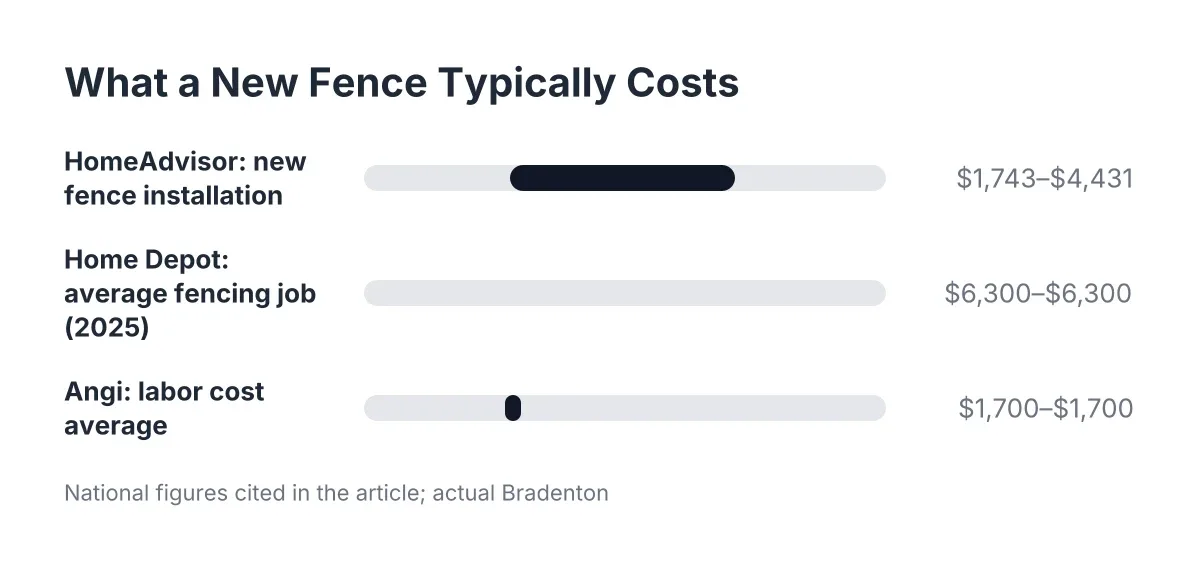
A fence estimate is a written statement of what the job includes and what it will cost, based on your yard and your choices. A useful fence estimate breaks out materials, linear footage, gates, tear-out of the old fence, and permits, so you can compare quotes fairly. Vague one-line estimates make surprises easy. For a plain breakdown of what pushes fence cost up or down, see our guide to fence installation cost.
Linear Foot
A linear foot is a straight-line measurement of fence length, and it is the main unit fencing is priced by. One hundred linear feet means one hundred feet of fence line, regardless of height. Height, material, and gates change the per-foot price, but the footage itself is the first number every estimate is built on. Measuring your own fence line before calling gives you a head start on any conversation.
Property Survey
A property survey is the official drawing that shows exactly where your lot lines are. Installers and permit offices rely on it, because fences built on a guess can end up on a neighbor's land. If you cannot find your survey, your closing paperwork from when you bought the home often includes it. Building off the survey protects you from an expensive move-the-fence dispute later.
Setback
A setback is the minimum distance local rules require between your fence and a boundary, street, or other feature. In low-lying and flood-zone areas around Bradenton, setbacks and drainage requirements can shape where a fence is allowed to go. Your installer or the local permit office can confirm what applies to your lot. A fence placed inside a required setback can be ordered removed, so this is worth checking before the posts go in.
Permit
A permit is written approval from your local building department to install or replace a fence. Many areas require one, and the application usually needs your survey and a simple site plan. Ask any fence company who pulls the permit, you or them, and whether that work is included in the quote. Skipping a required permit can stall a future home sale or force changes after the fence is built.
Easement
An easement is a strip of your property that a utility, drainage district, or neighbor has a legal right to access. You may be allowed to fence across an easement, but the easement holder can usually remove the fence to do their work, at your expense. Drainage easements are common in low-lying Florida neighborhoods. Your survey shows where easements sit, which is one more reason to dig it out before fence installation starts.
Fence Replacement vs. Fence Repair
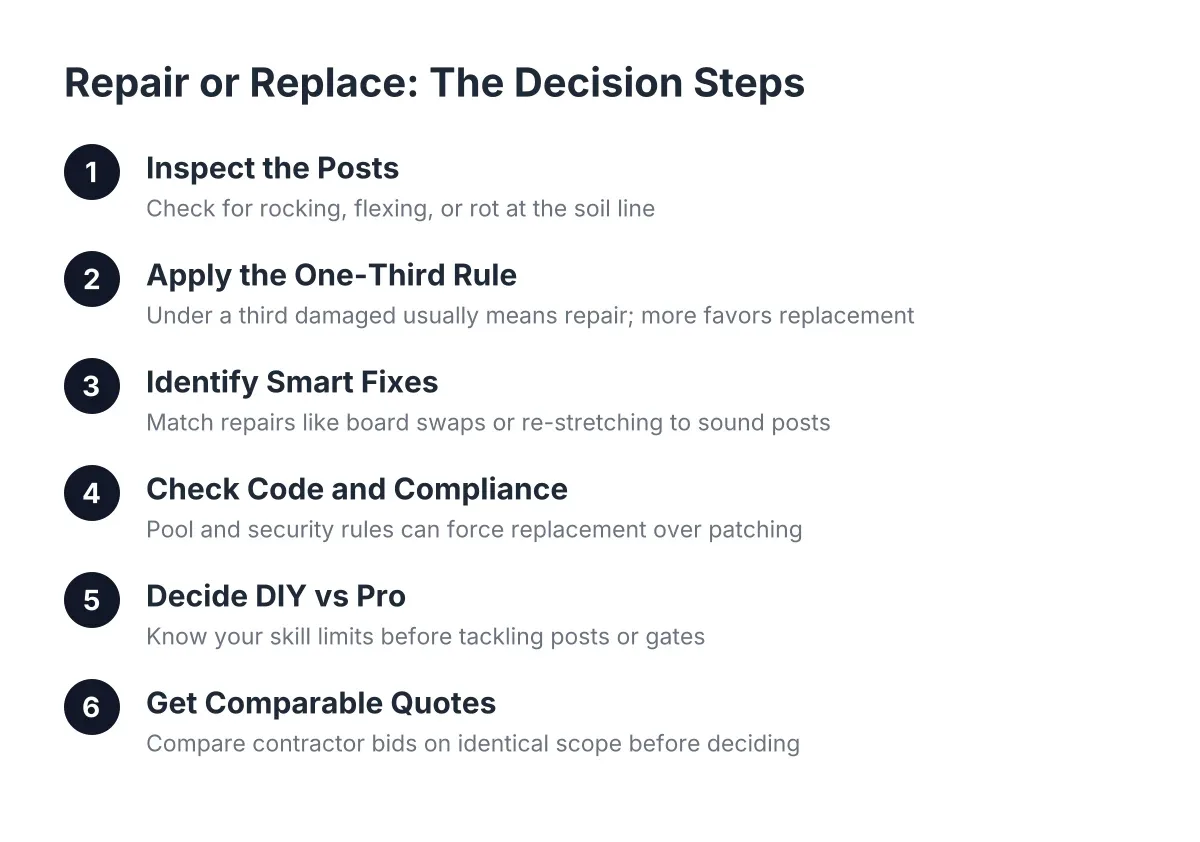
Fence replacement means removing the old fence and installing a new one, while fence repair means fixing specific posts, panels, or gates and keeping the rest. The dividing line is usually the posts: if most posts are solid, repair often makes sense; if posts are rotting or leaning throughout, replacement saves money over repeated fixes. An honest estimator will tell you which side of that line your fence sits on, and why.
Using These Terms
With this fence company glossary in hand, you can read an estimate line by line and know what each charge covers, from post setting to gate hardware. You can also ask the questions that separate careful installers from fast ones: how deep the posts go, what gauge the wire is, and who pulls the permit. That is the whole point, fewer surprises between the quote and the finished fence, whether you are in Bradenton or getting fence installation in Ruskin or nearby towns.
If you need fence installation, Manatee Fence Co can help.
Prefer to talk it through? Call (941) 219-6611 — a quick call is usually the fastest way to get a straight answer for your situation.