Chain Link Fence Installation Terms Explained: A Plain-English Glossary
If you are comparing fence quotes in Bradenton and keep hitting words like "terminal post" or "tension band," this chain link fence installation glossary is for you. It explains the terms installers use in plain English so you can read a fence estimate line by line and know what you are paying for. Use it to ask sharper questions, compare bids fairly, and spot a quote that leaves something out. No sales talk, just the words and what they mean.
- Chain Link Fabric: the woven wire mesh itself
- Gauge: wire thickness, lower number means thicker
- Mesh Size: the diamond opening in the fabric
- Galvanized Coating: zinc layer that fights rust
- Vinyl-Coated Chain Link: color coating over the wire
- Terminal Post: heavy post at ends, corners, and gates
- Line Post: lighter post along the straight runs
- Top Rail: horizontal pipe along the top of the fence
- Tension Bar: flat bar woven into the fabric at the ends
- Tension Band: clamp that ties the tension bar to a post
- Post Hole and Concrete Footing: the dug hole and concrete that anchor posts
- Stretching: pulling the fabric tight before attaching it
- Gate Hardware: hinges, latches, and frames for gates
- Setback: how far the fence must sit from property lines
- Utility Locate: marking buried lines before digging
- Linear Foot: how fence length is measured and priced
- Tear-Out: removing an old fence before the new one goes in
Chain Link Fence Fabric, Posts, and Rails in Installation Glossary
Most of the confusing words in any chain link fence installation glossary are just names for parts. Here are the pieces you will see on a quote.
Chain Link Fabric and Glossary of Key Installation Components
Chain link fabric is the woven wire mesh that makes up the body of a chain link fence. It comes in rolls and gets stretched between posts after they are set. When a quote lists "fabric," it means the mesh itself, not the posts or rails. Fabric quality is where thickness and coating matter most, so it is worth a close look on any estimate.
Gauge
Gauge is the thickness of the wire in chain link fabric, and a lower number means thicker wire. A 9-gauge fence uses heavier wire than an 11-gauge fence, so it resists sagging and damage better. Thicker wire costs more, which is one reason two quotes for the same length of fence can differ. In Bradenton, heavier gauge also holds up better against storm-season debris and daily wear.
Mesh Size
Mesh size is the width of the diamond-shaped openings in chain link fabric. Smaller diamonds use more wire, which makes the fence stronger and harder to climb but also raises the cost. Larger diamonds are common for basic yard fencing. If you have small pets or security concerns, ask about a tighter mesh.
Galvanized Coating
A galvanized coating is a layer of zinc applied to steel wire to protect it from rust. It is the standard finish on most chain link fences and the reason they last so long outdoors. Coastal humidity and salt air around Bradenton make the coating quality matter more than it would inland. A quote that mentions galvanizing before or after weaving is describing when the zinc went on, and both are common.
Vinyl-Coated Chain Link
Vinyl-coated chain link is chain link fabric with a colored plastic coating, usually black or green, bonded over the wire. The coating adds a second layer of rust protection and helps the fence blend into landscaping. It costs more than plain galvanized fabric. For homeowners who want a chain link fence that disappears visually against trees or a hedge, this is the usual upgrade.
Terminal Post
A terminal post is the heavier, larger-diameter post set at the ends, corners, and gate openings of a chain link fence. Terminal posts carry the pulling force of the stretched fabric, so they are thicker and set in more concrete than the posts along the straight runs. More corners and gates mean more terminal posts, which nudges the price up. An odd-shaped yard can need several of them.
Line Post
A line post is the lighter post spaced along the straight sections of a chain link fence between terminal posts. Line posts hold the fence upright but do not take the full tension of the fabric, so they can be smaller. Installers space them at regular intervals along each run. Closer spacing adds strength and cost, which matters on windy or exposed Bradenton lots.
Top Rail
A top rail is the horizontal pipe that runs along the top of a chain link fence and connects the posts. It keeps the fabric from sagging and gives the fence a clean, straight line. Some fences skip the top rail and use a tension wire instead, which costs less but looks less finished. If one quote includes a top rail and another does not, that difference alone can explain a gap in price.
Tension Bar
A tension bar is a flat metal bar woven vertically through the end of the chain link fabric. It gives the installer something solid to grip when attaching the fabric to a terminal post. Without it, the mesh would pull loose at the ends over time. You will see one at every end, corner, and gate opening.
Tension Band
A tension band is a metal clamp that wraps around a terminal post and bolts to the tension bar, locking the stretched fabric in place. Several bands run up each terminal post. They are small parts, but loose or missing bands are a common cause of saggy, floppy fence ends. If your older fence droops near a corner, the bands are one of the first things a repair visit checks.
Installation Process: From Dig to Done in Chain Link Fence Glossary
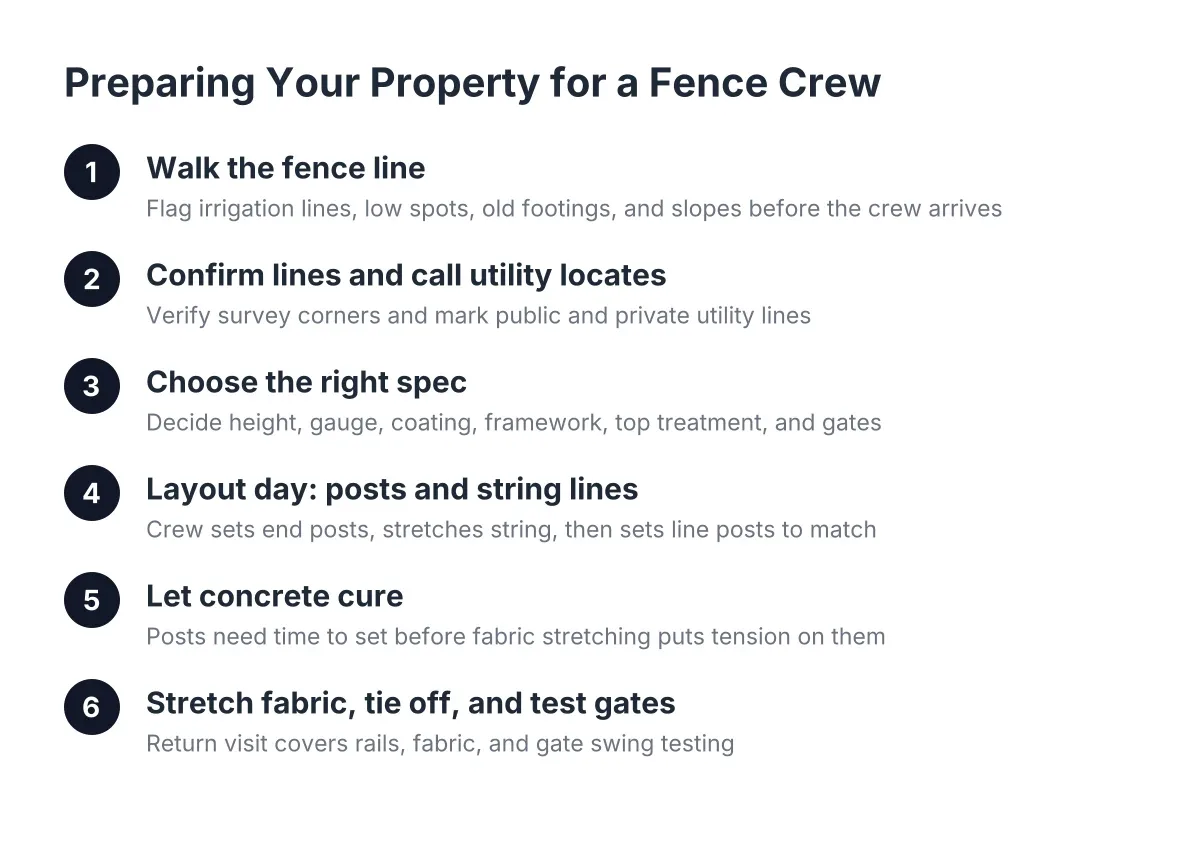
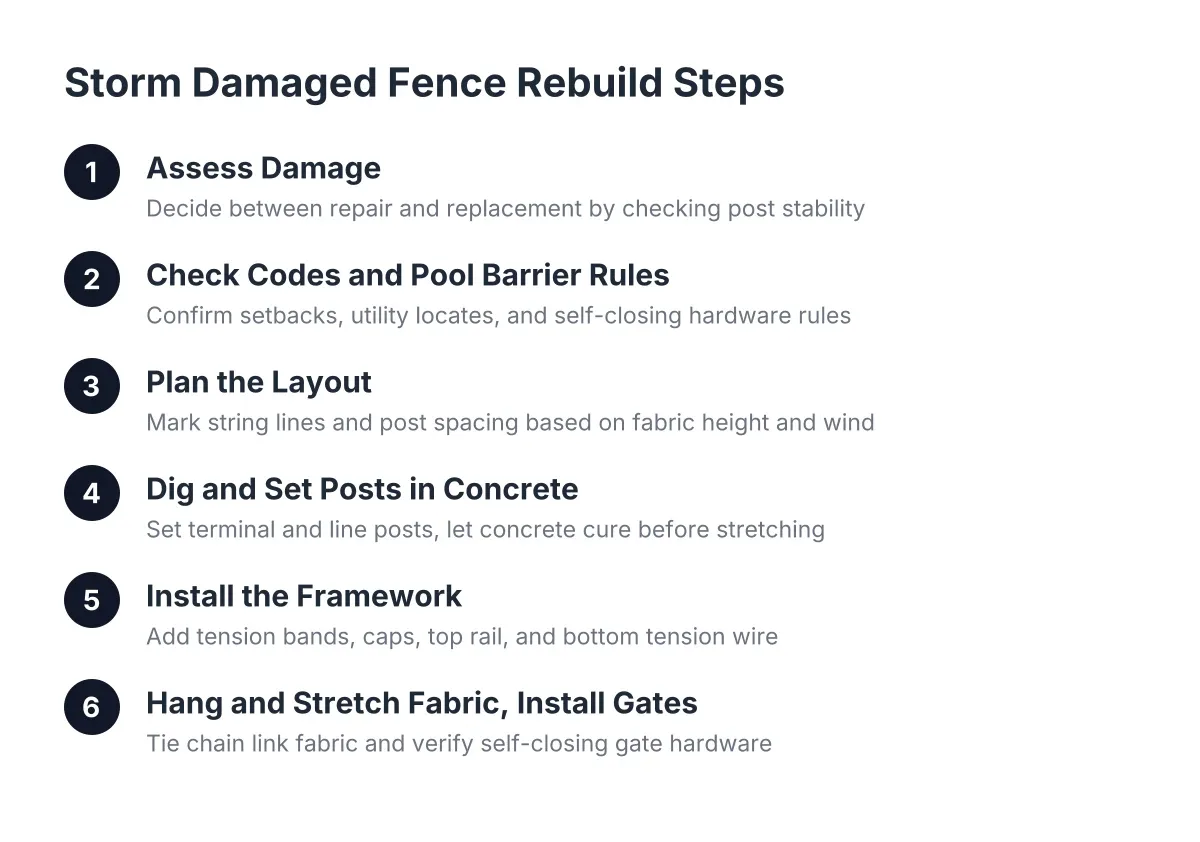
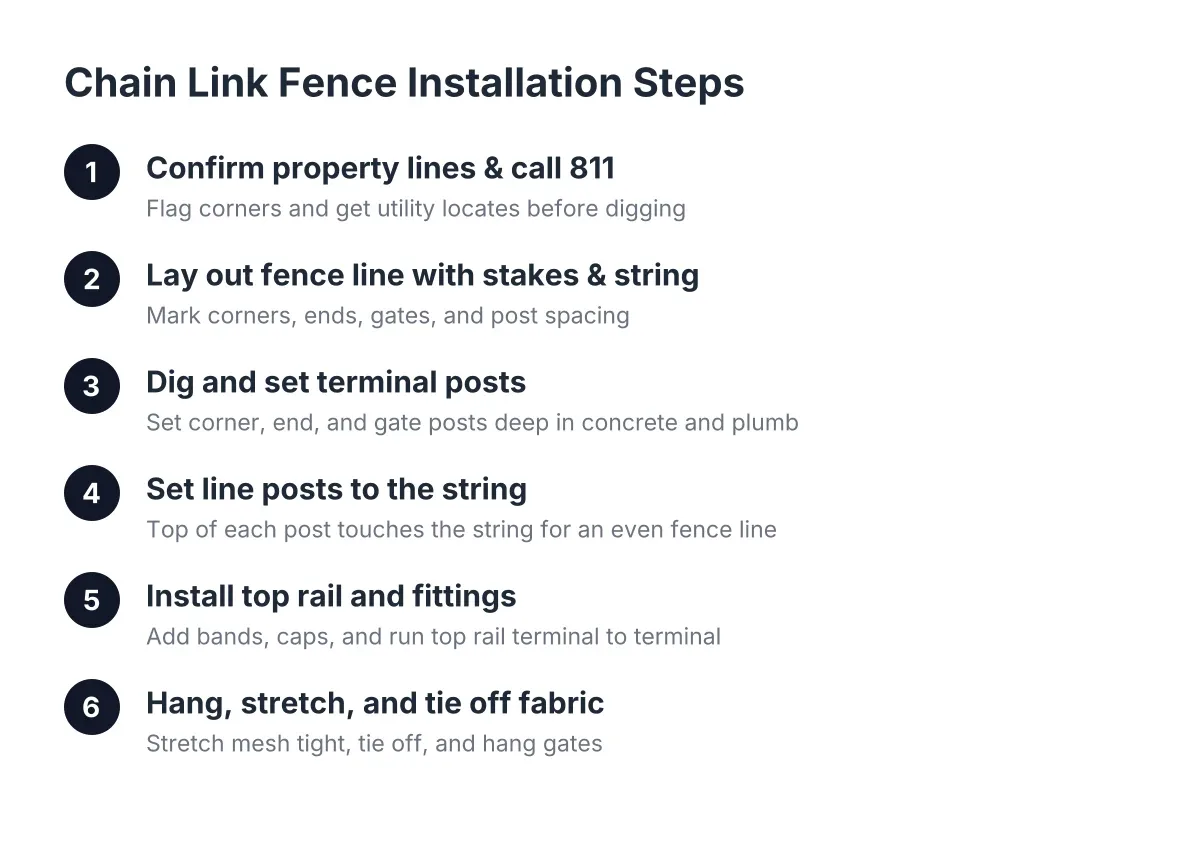
These terms describe the work itself. Knowing them helps you follow what happens on install day; for the full sequence, see how chain link fence installation actually works, step by step.
Post Hole and Concrete Footing
A concrete footing is the concrete poured into a dug post hole to anchor a fence post in the ground. The hole's depth and width depend on the post type and the soil. Sandy, low-lying Bradenton lots often need careful footing work because loose soil and a high water table give posts less natural grip. Posts must cure, meaning the concrete hardens, before the fabric is stretched, so a chain link fence installation usually happens over more than one visit.
Stretching
Stretching means pulling the chain link fabric tight between terminal posts before attaching it, usually with a tool called a fence puller. Proper stretching is what separates a crisp, tight fence from a wavy one. Fabric that was never stretched correctly sags early and never fully recovers. If a fence feels loose right after install, stretching is the step that went wrong.
Gate Hardware
Gate hardware means the hinges, latches, and frame pieces that make a fence gate swing and close. Gates take more daily abuse than any other part of a fence, so hardware quality shows up fast. A quote should spell out gate width, swing direction, and latch type. If you are considering an automatic gate installation down the road, mention it early so the posts and opening are sized for it.
Pricing and Paperwork
Setback
A setback is the required distance between your fence and a property line, street, or easement. Local rules decide where a fence can legally sit, and in low-lying or flood-zone areas near Bradenton those rules can affect the layout. A good installer checks setbacks before digging, not after. Ask who is responsible for confirming your property lines, because that answer should appear in writing.
Utility Locate
A utility locate is the process of marking buried gas, water, and electric lines before anyone digs post holes. In most areas you or your contractor calls a free locate service and waits for the markings before work starts. Skipping this step risks hitting a line, which is dangerous and expensive. If an installer never mentions locating utilities, that is a red flag worth raising.
Linear Foot
A linear foot is a straight-line measurement of fence length, and it is the unit most fence estimates are priced by. Measure your fence line in feet along the ground, and that number is your linear footage. Price per linear foot moves with fabric gauge, fence height, coatings, and the number of gates and corners. Our guide to chain link fence installation cost walks through those factors one by one.
Tear-Out
Tear-out means removing and hauling away an old fence before the new one goes in. It takes labor, dump fees, and sometimes digging out old concrete footings, so it appears as its own line on many quotes. If your estimate does not mention tear-out and you have an existing fence, ask whether removal is included. A fence replacement quote that skips this line is not complete.
Using These Terms
This chain link fence installation glossary gives you the vocabulary to read a quote line by line instead of skimming to the total. You can now ask about gauge, footings, tear-out, and setbacks and understand the answers you get back. If you are planning a project in the Bradenton area, those sharper questions are the best tool you can bring to any fence estimate.
If you need chain link fence installation, Manatee Fence Co can help.
Prefer to talk it through? Call (941) 219-6611 — a quick call is usually the fastest way to get a straight answer for your situation.