Chain Link Fence Installation: A Step-by-Step Guide for Florida Yards
If you just closed on a new home with a bare lot, chain link fence installation is one of the fastest ways to get a secure perimeter around your yard. Learning the chain link fence steps involved helps you understand what should happen on your property and where the job can go wrong. It also pairs well with a driveway gate, including a motorized gate you can open from the car.
One note before the steps. Chain link looks simple, but the quality of the install lives underground and in the stretch of the fabric. A fence that sags or leans in two years almost always traces back to a shortcut on day one. Keep that in mind whether you hire this out or tackle part of it yourself.
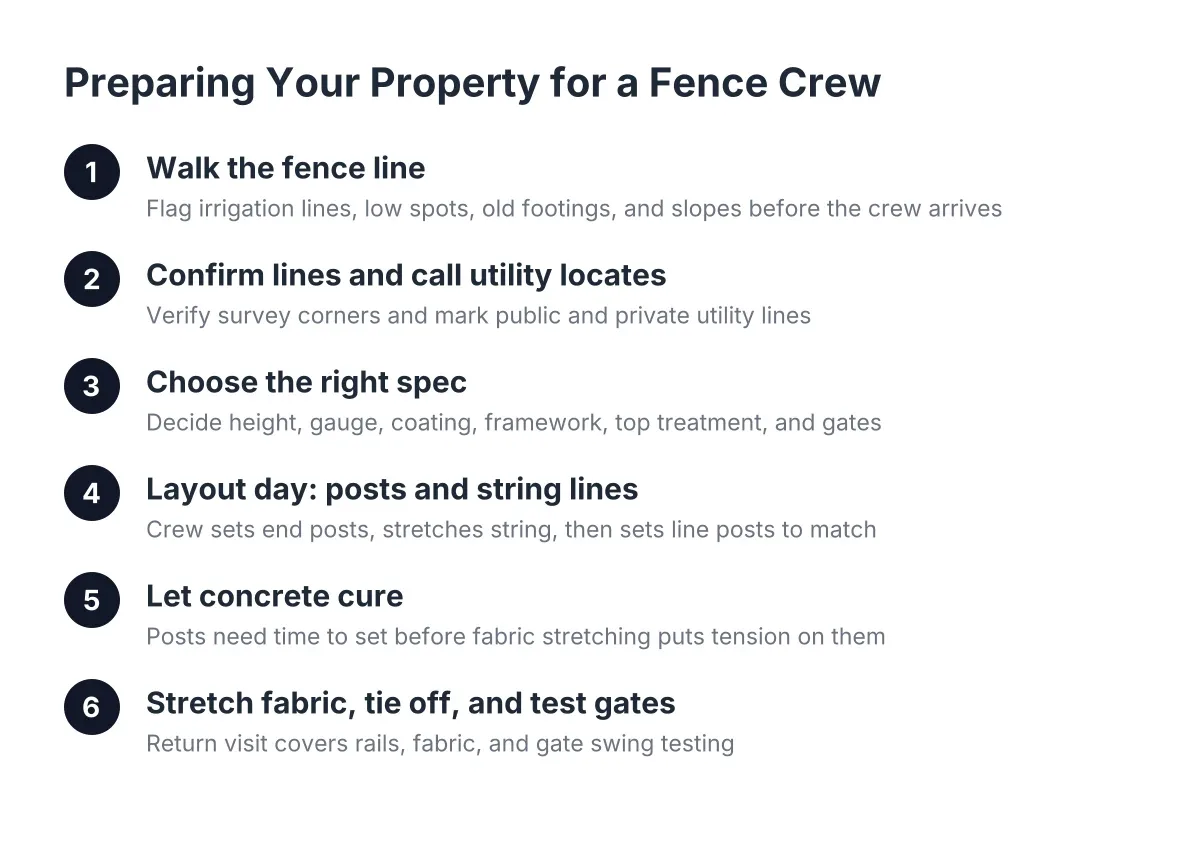
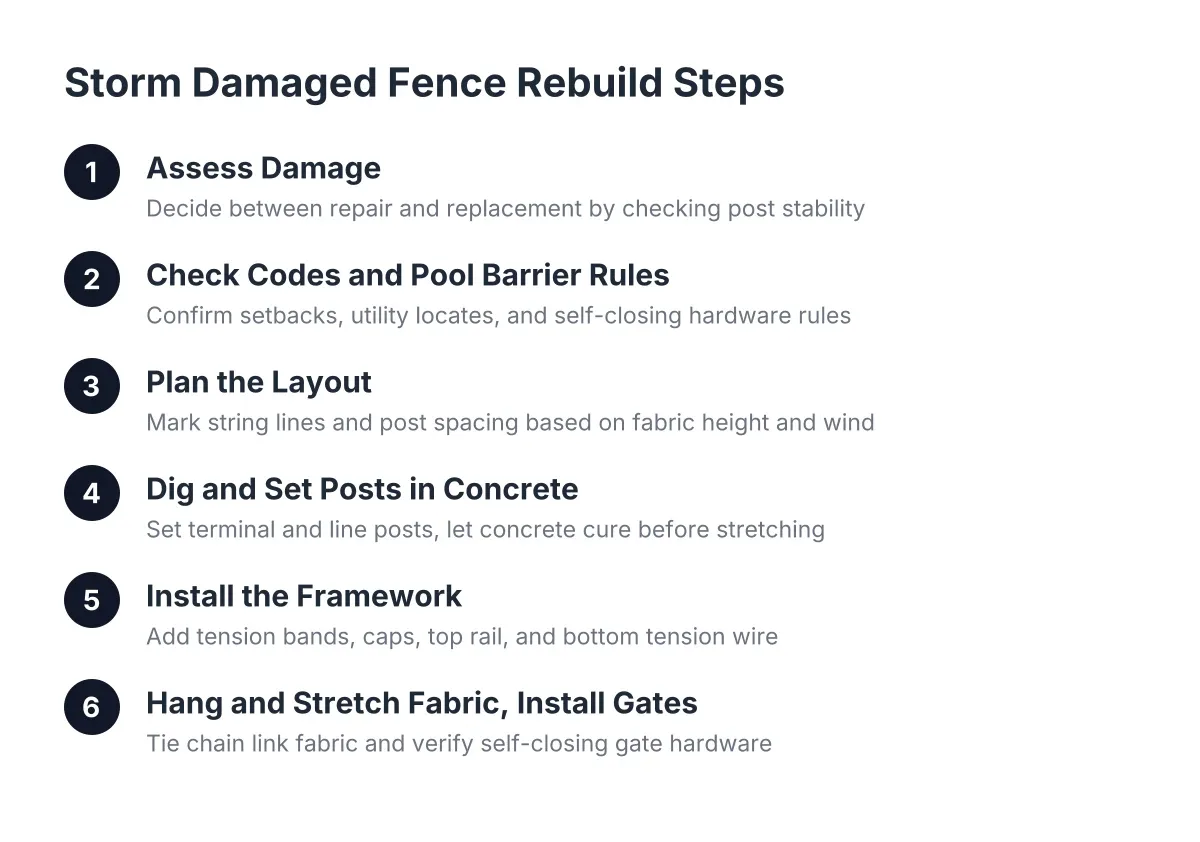
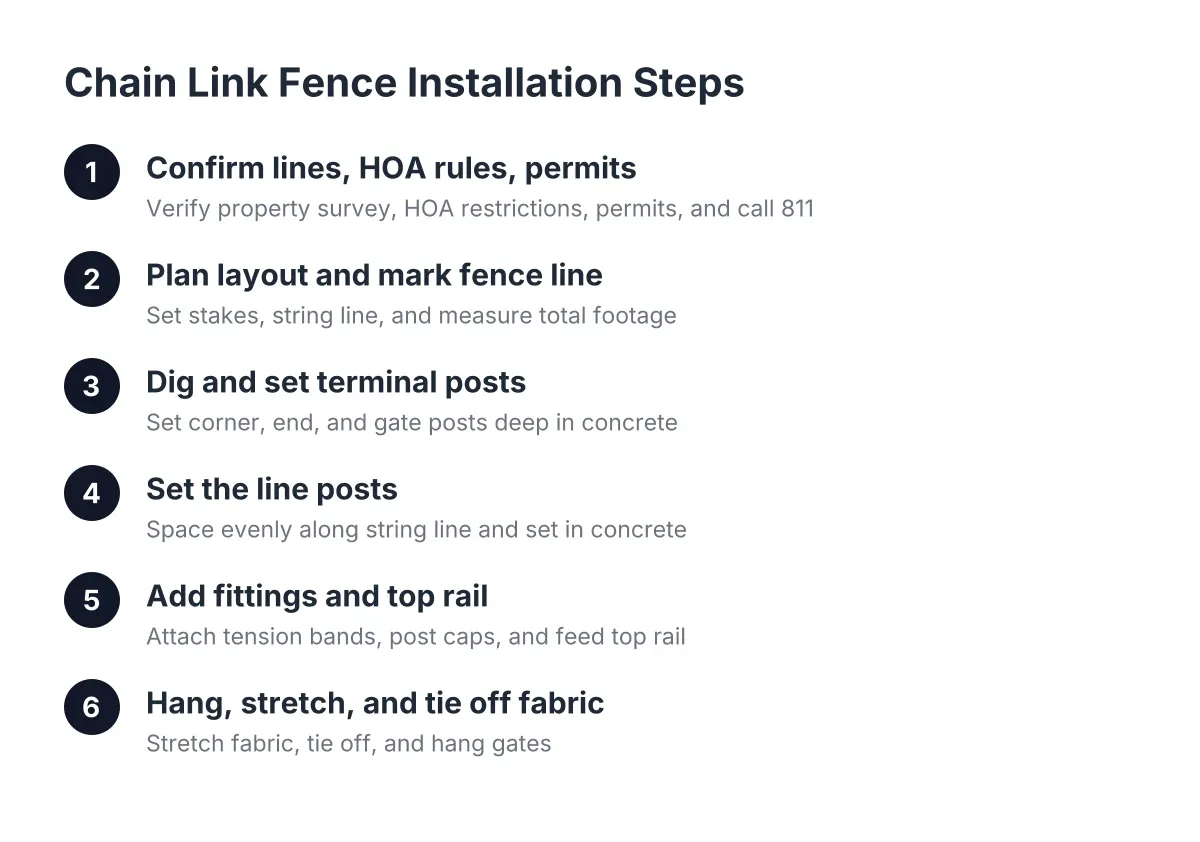
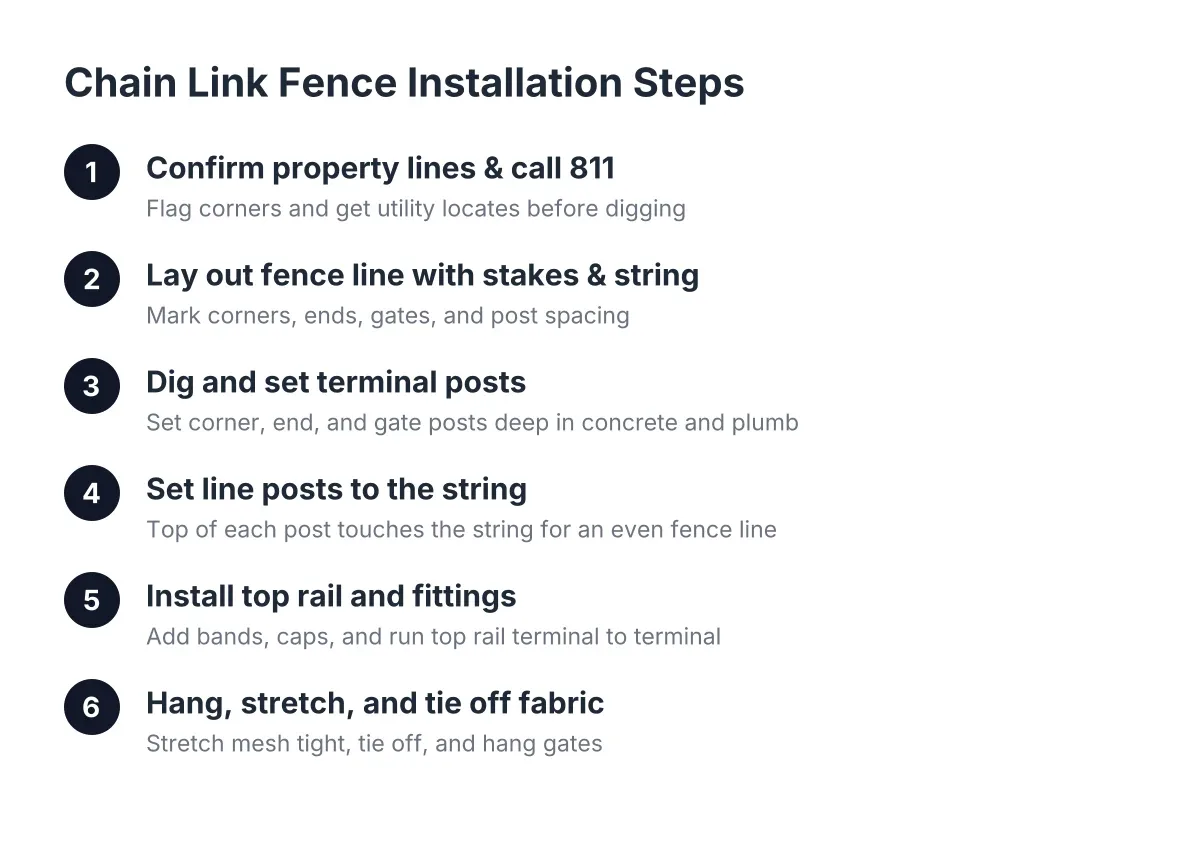
Step 1: Confirm Your Property Lines and Call in Utility Locates
Start by finding your actual property corners, not where the sod line or the neighbor's shed suggests they are. On a new build, your survey from closing marks the corners; find the pins or have a surveyor flag them. Setting a fence a foot over the line is an expensive mistake to undo.
Next, call 811 a few days before any digging so utility lines get marked. New-construction lots often have shallow irrigation, cable, and electrical runs that were trenched late in the build. If you plan to add an electric gate later, this is also the moment to think about where power will reach the driveway, because trenching conduit is far easier before the fence goes in.
In Bradenton, check your permit and setback requirements too. Lots in flood zones and low-lying areas can carry setback rules that affect where posts can go.
Step 2: Lay Out the Fence Line with Stakes and String
Mark every corner, end, and gate location with a stake. Then stretch a string line tight between the stakes. That string is the single most important layout tool on the job; posts set to a string end up straight, and posts set by eye end up as a visible wave you cannot fix later.
Mark your post spacing along the string. Terminal posts (corners, ends, and gate posts) get set first, and line posts fill the runs between them at even intervals. Plan gate openings now, not later. A driveway gate that will eventually get an automatic opener needs posts sized and spaced for the gate hardware, so decide the opening width before you dig.
Chain Link Fence Steps: Digging and Setting Terminal Posts
Terminal posts carry the tension of the entire fence, so they get the deepest holes and the most concrete. In Bradenton's sandy soil, this step matters more than it does on clay lots up north. Sand does not grip a post the way dense soil does, so a shallow footing lets the post rock loose over time, especially in storm-season wind.
Dig the holes, set each terminal post in concrete, and check plumb on two sides with a level. Posts must cure before anything pulls on them. Rushing this is one of the most common failure points in chain link fence installation; concrete that has not set cannot resist the pull of stretched fabric, and the post leans before the job is even done.
Gate posts deserve extra attention. A manual gate is forgiving. A motorized gate is not, because the operator arm or slide hardware depends on posts that stay plumb for years. If automation is in your plans, say so before the posts are set.
Step 4: Set the Line Posts to the String
With terminal posts cured, run your string line between them at the finished fabric height. Set each line post so its top just touches the string. This keeps the fence top even across the whole run, even where the ground rolls.
Line posts are shorter and thinner than terminal posts, and their holes are smaller. Pour concrete, plumb each post, and let everything cure. On a sloped section, decide now whether the fence will follow the grade or step down; chain link usually follows the grade smoothly, which is one of its advantages on uneven Florida lots.
Step 5: Install the Top Rail and Fittings
Slide tension bands and brace bands onto the terminal posts before capping anything; they cannot be added after the caps go on. Then install the post caps and loop caps, and run the top rail through the loop caps from terminal to terminal. Rail sections join with swedged ends or sleeves, and the rail gets cut to length at each terminal post and secured with a rail end cup.
The top rail does two jobs. It stiffens the whole framework, and it sets the line the fabric hangs from. A wavy rail means a wavy fence, so take the time to get it straight.
Step 6: Hang and Stretch the Chain Link Fabric
Unroll the fabric along the outside of the frame. Weave a tension bar through the end of the mesh and bolt it to the tension bands on the first terminal post. Then stand the fabric up against the frame as you work down the run.
Stretching is the step that separates a tight, professional fence from a saggy one. A fence puller or come-along grips a tension bar woven into the fabric near the far terminal post and pulls the mesh tight. Properly stretched fabric gives slightly under hand pressure and springs back; loose fabric ripples, sags, and makes the whole fence easier to push down or climb.
Once the fabric is tight, weave in the final tension bar, attach it to the terminal post bands, and remove the excess mesh by unwinding a single strand.
Step 7: Tie Off the Fabric and Hang the Gates
Attach the fabric to the top rail and line posts with fence ties. Ties come in different lengths matched to the pipe diameter, so using the right size matters for a secure wrap. Space them evenly along the rail and down each post. It is often easier to tie from the side of the post opposite the mesh when access allows.
In addition, hang your gates now. A walk gate bolts onto hinges on its gate post and gets a latch. A driveway gate gets hinges or rollers depending on whether it swings or slides. If an automatic gate opener is part of the plan, this is where the operator, safety sensors, and keypad or clicker receiver get mounted and wired. Gate automation adds real convenience, but it also adds electrical work and storm considerations, so most homeowners bring in a company that handles both gate installation and the fence itself.
Step 8: Walk the Fence and Check the Details
Before calling it done, walk the full line and check:
- Every post is plumb and solid, with no wobble at the base
- The fabric is tight, with no ripples or gaps at the bottom
- Ties are evenly spaced and fully wrapped
- Gates swing or slide freely, latch cleanly, and clear the driveway grade
- Concrete footings sit at or slightly below grade so mowers clear them
For example, suppose a new homeowner in Bradenton fences a quarter-acre lot with a double drive gate planned for a future motorized opener. In that scenario, the walk-through should pay special attention to the gate posts, because any lean there turns into alignment problems the day the opener arm goes on.
What Chain Link Fence Installation Typically Costs
Chain-link fences cost an average of $1,650 to $8,300 to install, including materials, according to HomeAdvisor. Where your project lands in that range depends on fence height, total footage, the number of gates, and site conditions. A 4-foot backyard fence sits at the low end; an 8-foot fence with a wide automated driveway gate sits much higher.
For broader context, according to HomeAdvisor, homeowners spend between $1,743 and $4,431 for a new fence installation, averaging $3,059 nationally. Local factors shift those numbers. In the Bradenton area, sandy soil, high water tables, and coastal corrosion push crews toward deeper footings and galvanized or vinyl-coated materials, which affects the final fence estimate.
One honest trade-off: the lowest bid is often the most expensive fence over time. Shallow posts and loose fabric mean a rebuild years sooner than a careful install, and paying twice costs more than paying right once.
When to Hire a Pro Instead of Doing It Yourself
Hire a professional for chain link fence installation when the job includes an automated gate, long runs over a few hundred feet, or a lot with drainage or setback complications. Stretching fabric correctly takes tools and practice, and gate automation involves electrical work that is not a first-time DIY project.
A straightforward, short run on flat ground is a reasonable weekend project for a handy homeowner with a helper. However, if you are automating a driveway gate, running power safely to the operator and setting gate posts that hold alignment through Florida storms are jobs worth handing to an installer who does both gates and fences. As of 2026, Bradenton-area permitting for fences in flood zones is another reason to have a local contractor confirm what your lot allows before the first hole gets dug.
If you need chain link fence installation, Manatee Fence Co can help.
Prefer to talk it through? Call (941) 219-6611 — a quick call is usually the fastest way to get a straight answer for your situation.