Commercial Chain Link Fence Installation: How to Prepare Your Property for a Crew
If you own a contractor yard, auto lot, or self-storage property in Bradenton, you have probably already decided chain link is the right call. Now the question is how to get chain link fence installation done right the first time, so the fence stands up to Gulf Coast wind, sandy soil, and daily commercial use. This guide walks you through the process step by step, from preparing your property for fence crew arrival to the final gate swing test, so you know what to expect and where your decisions matter most.
Most searches for chain link fence builders near me return a long list of names and not much guidance on what actually happens once you hire one. This article fills that gap. Follow these steps and you will know exactly what a good install looks like, what questions to ask, and what to check before the crew drives away.
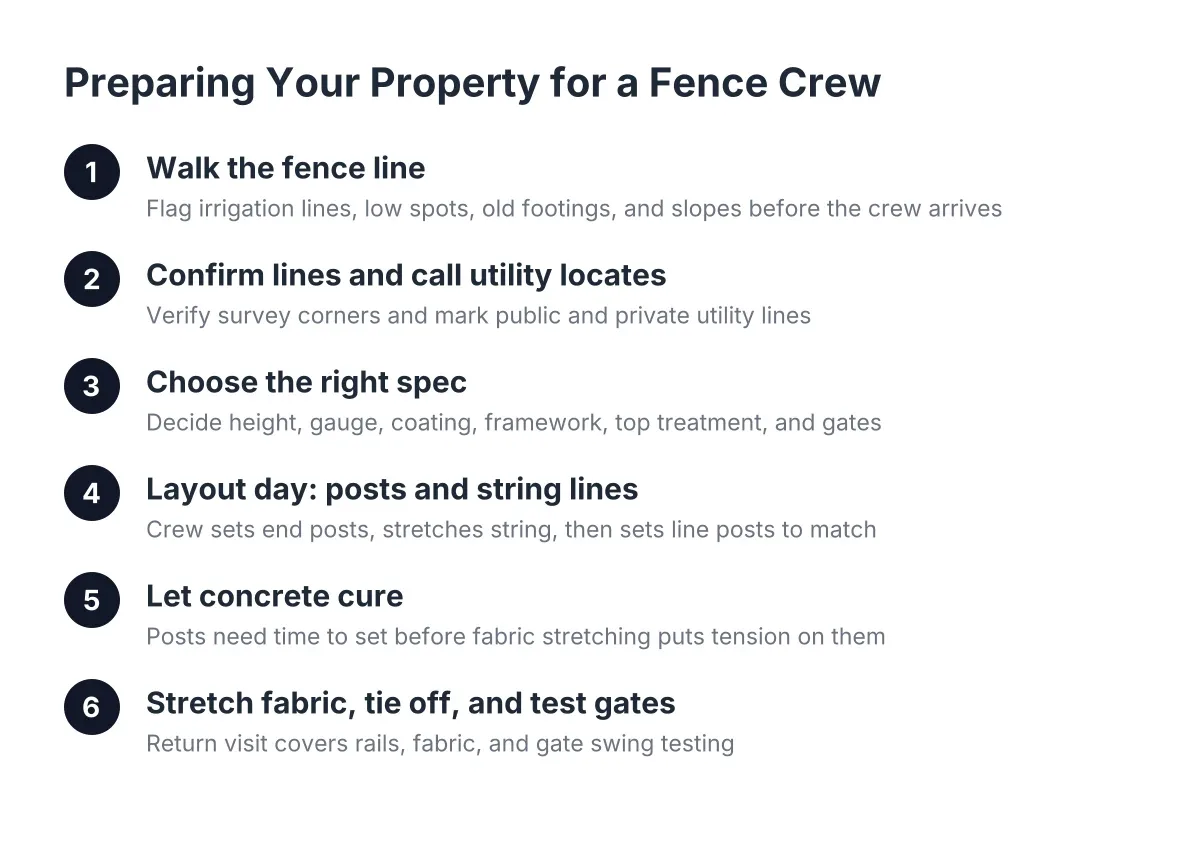
Step 1: Prepare Your Property and Walk the Fence Line
Before any crew shows up, walk the full perimeter yourself. Mark anything the installer needs to know about: buried irrigation lines, low spots that hold water after rain, old concrete footings from a previous fence, and places where the property slopes. When you prepare your property for the fence crew to arrive, you set the stage for a smooth install.
In Bradenton, low-lying lots and high water tables change how posts get set. A section that floods during summer storms may need deeper footings or different drainage planning. Flagging these areas early keeps the crew from discovering them on install day, which is when surprises cost time.
If your property sits in a flood zone, check whether setback rules affect where the fence can go. Commercial parcels sometimes have easements along the road frontage or utility corridors that limit post placement. Your installer should confirm this, but knowing it ahead of time speeds up the fence estimate.
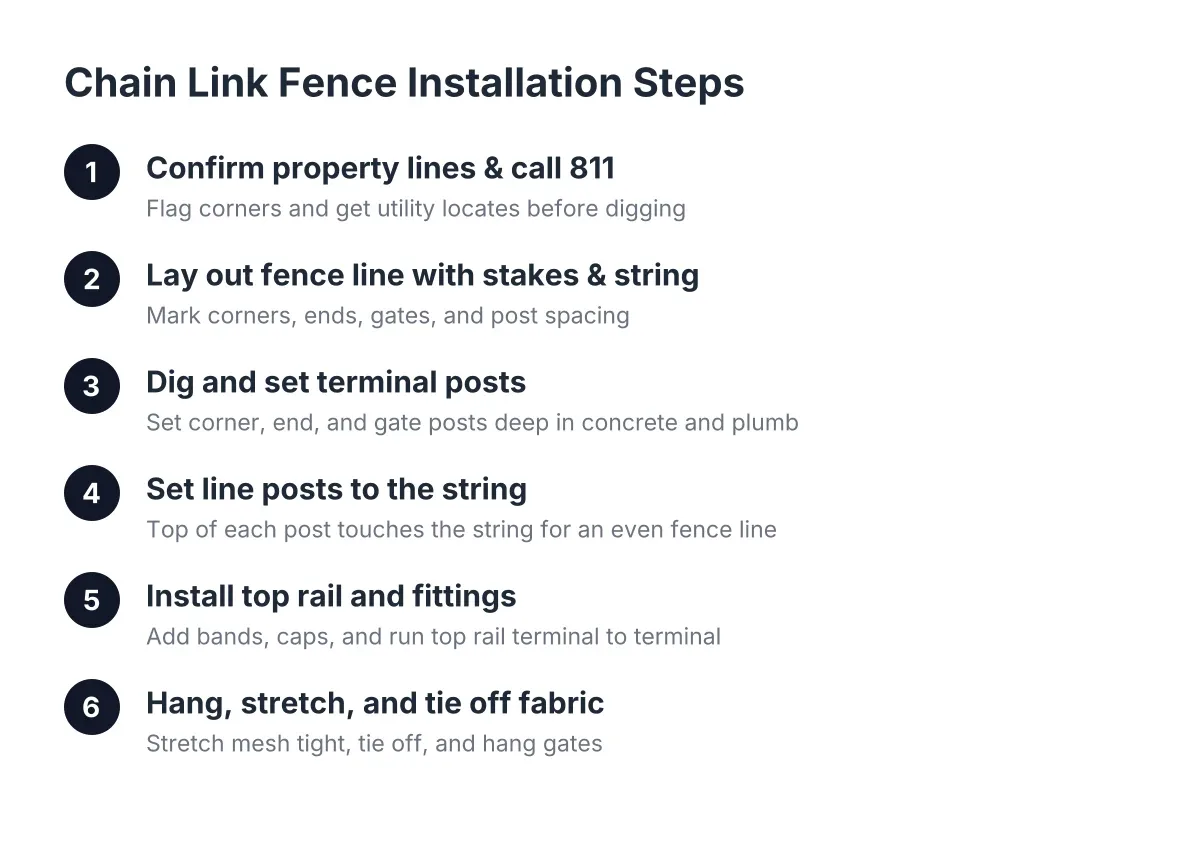
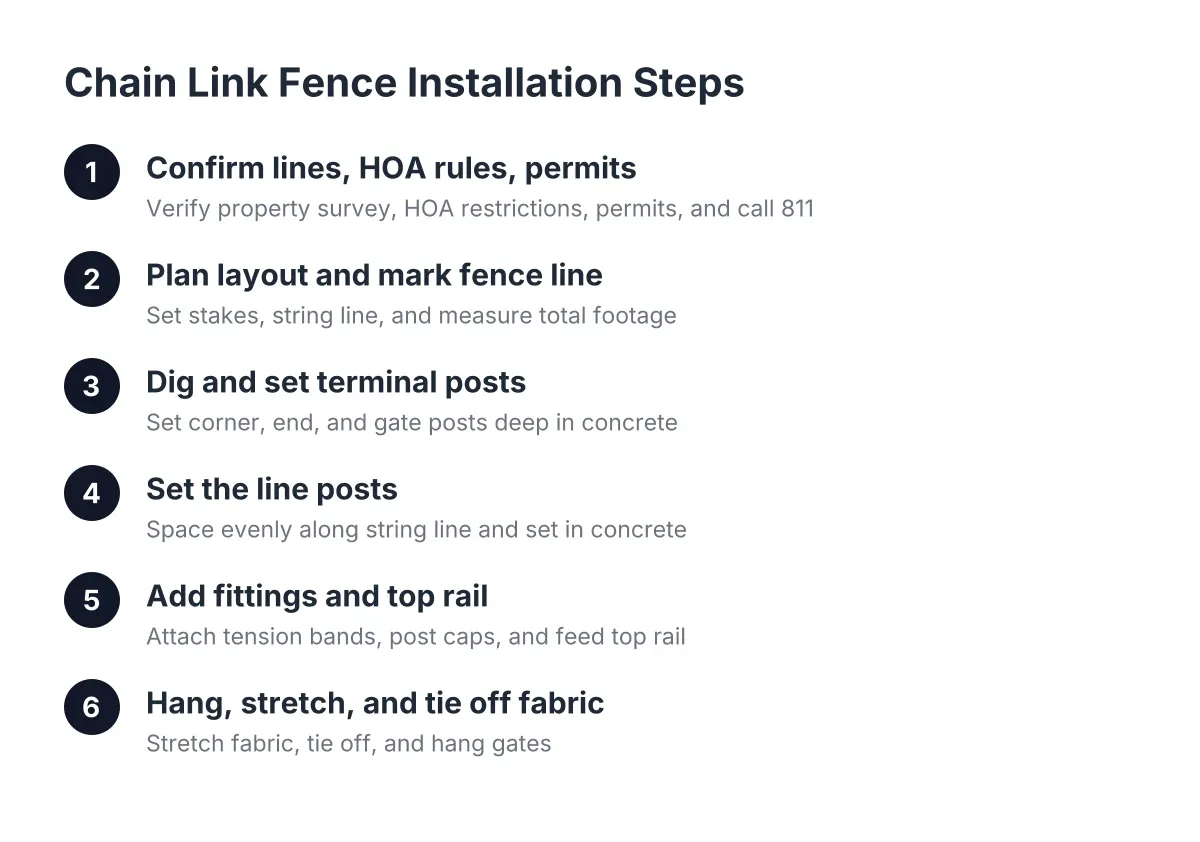
Step 2: Confirm Property Lines and Call in Utility Locates
Never let a crew dig on assumptions. Pull your survey, or order a new one if the corners are unclear. On commercial lots, a fence set even a foot over the line can trigger a dispute with the neighboring parcel, and moving posts after the concrete cures means paying for the work twice.
Utility locates are non-negotiable. In Florida, the locate service marks public lines for free, but private lines on commercial property, such as power runs to a sign or irrigation controllers, are not marked by that service. You or your installer need to identify those separately.
Step 3: Choose the Right Spec for the Job
Chain link is not one product. The spec you pick determines how the fence handles storm-season wind and whether it meets your insurance or lease requirements. Here is what to decide with your installer:
- Height. Many commercial perimeters in the Bradenton area run 6 feet, and plenty of storage and contractor yards go to 8 feet for security. If you are searching for an 8 ft chain link fence, confirm your local code allows that height at your location before you order material.
- Gauge and coating. Heavier gauge wire resists cutting and sagging. Galvanized handles our humidity well; vinyl-coated fabric adds another layer against salt air and looks cleaner on customer-facing frontage.
- Framework diameter and wall thickness. Commercial-grade posts and rails use larger diameter pipe with thicker walls than residential kits. On a windy coastal lot, this is where you do not want to cut corners.
- Top treatment. Barbed wire arms, if code and zoning allow them at your site, add deterrence for storage and equipment yards.
- Gates. Decide now whether you want a manual swing gate, a rolling gate, or an automatic gate with keypad or remote access. Gate posts need heavier footings, so this choice affects the layout from day one.
A good installer explains these trade-offs in plain terms during the fence estimate, including what drives fence cost up or down. For context on budget, HomeAdvisor reports chain link fences cost an average of $1,650 to $8,300 to install including materials, though commercial-grade specs, taller heights, and gate systems push jobs beyond typical residential figures.
Step 4: How to Prepare Property for Fence Crew Layout Work
On install day, the crew sets posts at both ends of each run first, then stretches a string line between them. Every post in between gets set to that line. This is how a straight fence happens; it is not eyeballed.
Watch for how the crew handles corners, gates, and terminal points. Those posts carry the tension of the stretched fabric, so they get larger diameter pipe and bigger concrete footings than line posts. In sandy Bradenton soil, footing depth and diameter matter more than they do in clay. When you prepare property for a fence crew to handle these details, sand does not grip a post the way denser soil does, so shallow footings are the number one reason fences lean after the first tropical storm.
In tight spots, such as where the fence butts against an existing structure or works around a tree, ask how the crew plans to reinforce that post. There are proven methods for difficult placements, and a crew that has an answer ready has done this before.
Step 5: Let the Concrete Cure Before Fabric Goes Up
This step is mostly about patience. Posts set in concrete need time to cure before the fence crew begins to stretch fabric, because stretching chain link puts real tension on the terminal posts. Pulling fabric against green concrete can shift posts out of plumb, and you end up with a wavy fence line.
Most crews split the job across visits for this reason. Day one is layout and posts. The return trip covers rails, fabric, and gates. If your operation needs the lot secured overnight between visits, raise that during scheduling. Many commercial installs can be sequenced so the most vulnerable side of the property closes up first, and some crews can work outside business hours so your gate access is never blocked during operating hours.
Step 6: How to Prepare Your Property and Watch the Fabric Stretch and Tie-Off
Stretching is where chain link installation quality shows. The crew attaches the fabric to one terminal post with a tension bar, then uses a fence puller to draw it tight along the run before securing the other end. Properly stretched fabric gives slightly under hand pressure and springs back; loose fabric sags between posts and invites climbing.
After the stretch, the crew ties the fabric to the top rail and each line post with fence ties. Tie length varies with the pipe diameter, which is a small detail, but a crew using the right ties for commercial-size posts is a crew paying attention. Tension wire along the bottom keeps the fabric from being pushed up at ground level, which matters for lots that deal with theft attempts or animals.
Step 7: Test Every Gate Before the Crew Leaves
Gates fail more often than fence runs, so test them while the installer is still on site. Swing or roll each gate through its full travel. Check that latches engage cleanly and that the gate does not drag or bind at any point.
If you ordered automatic gate installation, run the full cycle several times. Test the keypad, remotes, and safety reversal. Ask where the manual release is and how to use it during a power outage, which is a real consideration during storm season here. An electric gate that cannot be opened by hand after a hurricane knocks out power becomes a serious access problem for your business.
Step 8: Document the Install for Insurance and Lease Files
Commercial property owners often need the fence on paper, not just on the ground. Before you close out the job, collect:
- The final invoice with the spec listed: height, gauge, coating, and framework sizes.
- Photos of the completed perimeter, gates, and footings before backfill if possible.
- Any permit documentation your municipality required.
- The installer's contact information for future chain link fence repair.
This file matters if a storm damages the fence later. Suppose a tropical system drops a tree limb across two sections of your yard fence next August. In that scenario, documented specs and photos make the insurance conversation faster, and they tell the repair crew exactly what material to bring so the patched sections match the rest of the run.
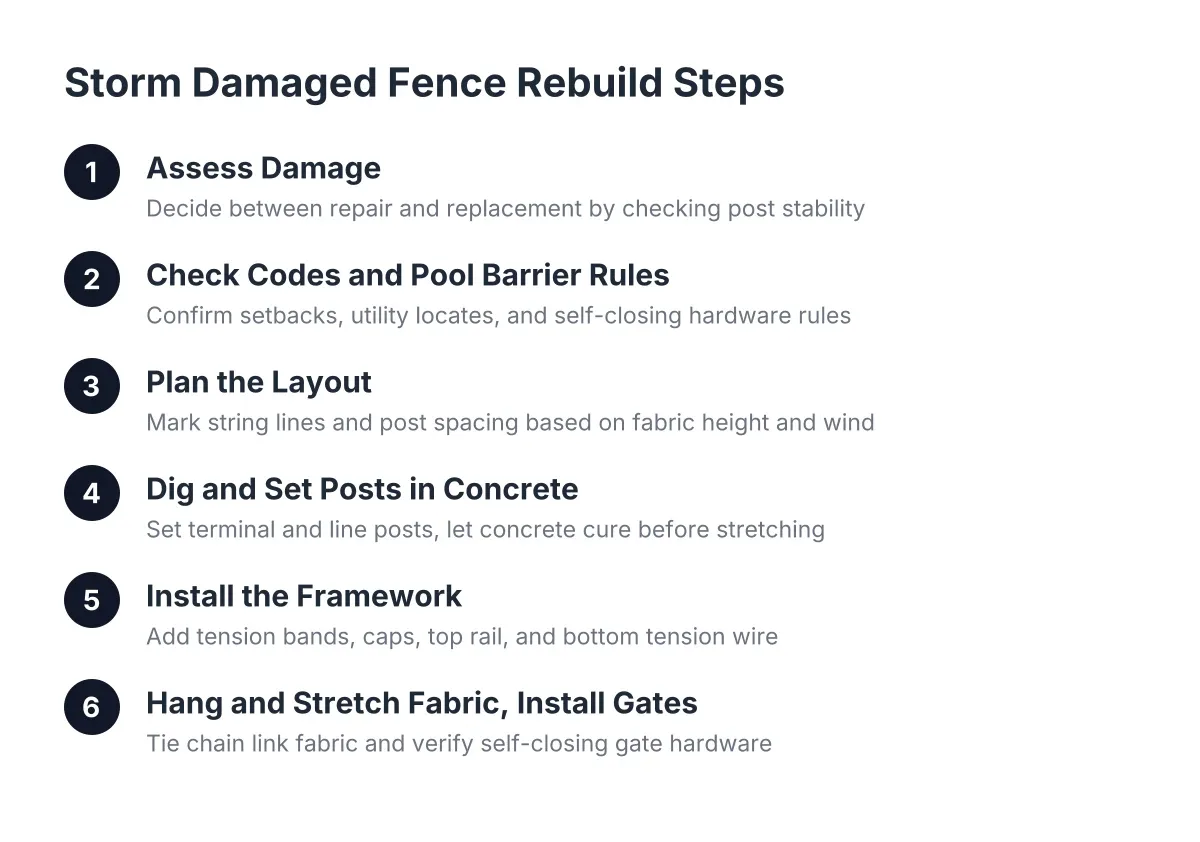
When Chain Link Fence Installation Needs a Pro Versus a Patch
Not every situation calls for a full new fence. If you have an existing chain link perimeter with a few bent posts or torn fabric sections after a storm, a repair may hold fine, provided the terminal posts and footings are still sound. However, if posts are heaving out of sandy soil, footings have cracked, or the framework is rusted through, patching throws money at a fence that is failing structurally. An honest contractor will tell you which situation you have and why, and it is worth getting that assessment from someone who works in Bradenton soil regularly rather than guessing from the curb.
One more trade-off worth naming: the lowest bid is not always the cheapest fence. Undersized posts and shallow footings save money on day one and cost more when the fence has to be rebuilt years early. Compare quotes on spec, not just the bottom line.
Done right, a commercial chain link perimeter in the Bradenton area is one of the most durable, lowest-maintenance security investments a property owner can make. Follow these steps, ask the questions along the way, and you will get a fence that is still standing straight long after the next storm season passes.
If you need chain link fence installation, Manatee Fence Co can help.
Related guide: chain link fence installation — Complete Guide
Prefer to talk it through? Call (941) 219-6611 — a quick call is usually the fastest way to get a straight answer for your situation.