DIY Gate Installation vs. Professional Install in Bradenton, FL: Costs and Mistakes
If you own or manage a commercial lot in Bradenton, FL, you have probably weighed DIY gate installation against professional install at least once. The math looks tempting on paper. A gate kit, some concrete, a weekend, done. Then you start reading about post depth, sandy soil, gate operators, and inspection requirements, and the picture gets murkier. This FAQ walks through the real questions property owners ask when deciding between the two, including what actually goes wrong with DIY gates and where the money goes on a professional job. Understanding common DIY gate installation mistakes can help you decide whether to tackle the work yourself or hire a professional.
Common DIY Gate Installation Mistakes to Avoid
You can install a simple manual walk gate yourself if you are comfortable setting posts in concrete and hanging hardware level. However, driveway gates, commercial gates, and any automatic gate installation are a different job entirely. Those involve heavier loads, electrical work, safety sensors, and in many cases permits and inspections, which is where a professional earns the fee.
For a commercial property, the stakes are higher. A sagging gate on a contractor yard or storage facility is not a cosmetic problem; it is a security gap. If the gate controls vehicle access or ties into access control, treat it as a professional job from the start.
What does DIY gate installation actually cost compared to professional work?
DIY gate installation saves labor costs upfront, but the gap is smaller than most people expect once you price tools, concrete, hardware, and your own time. For context on fencing labor generally, the average homeowner spends $1,700 in labor fees for fence installation, according to Angi. Gates run higher per opening than fence line because of the hardware, alignment work, and, for motorized gates, the operator and electrical.
The hidden cost of DIY is the redo. Suppose a lot owner in Bradenton sets a double drive gate in sandy soil over a weekend. Six months later the posts have shifted, the leaves no longer meet in the middle, and the latch will not catch. In that scenario, the owner pays twice: once for the DIY materials, and again for a crew to pull the posts, reset them deeper, and rehang the gate. This kind of setback is one of the most common DIY gate installation mistakes to avoid. That second bill often exceeds what professional installation would have cost the first time.
Common Errors in Gate Installation and How to Avoid Them
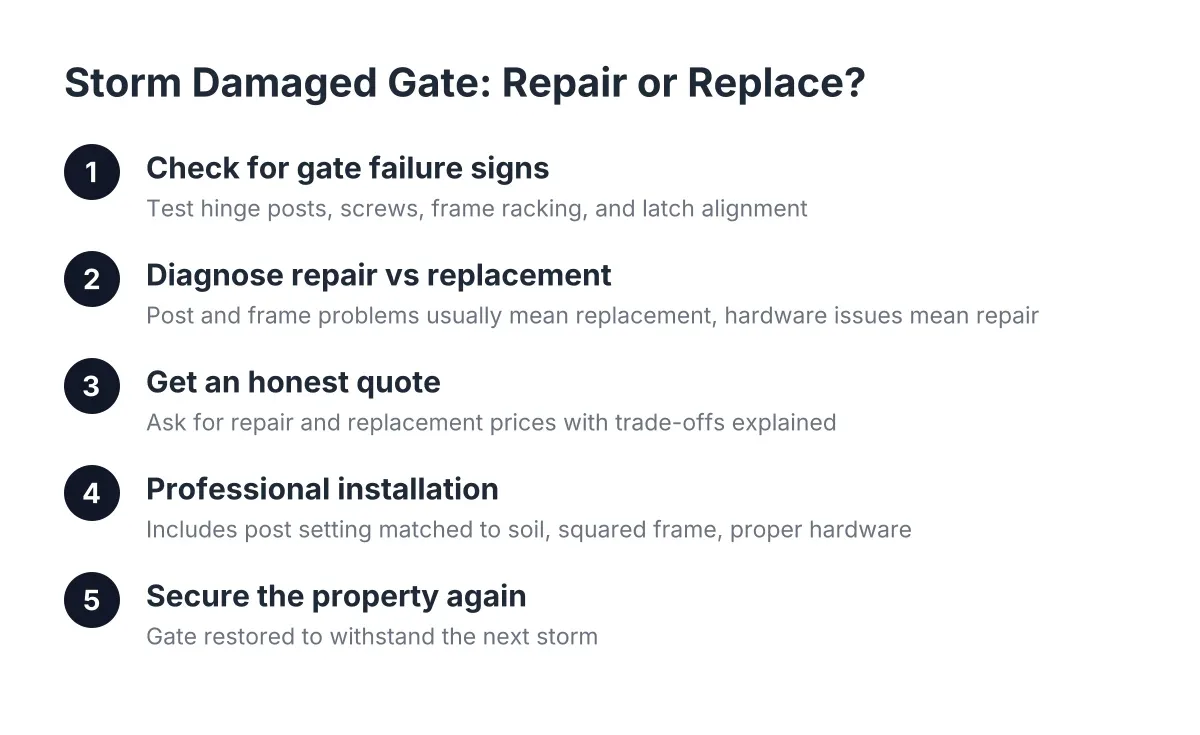
An incorrectly installed gate sags, drags, or stops latching, and on automatic systems it can become a safety hazard. The most common failure point is the posts. Gates concentrate all their weight on two posts, so a post set too shallow, or set in concrete that was mixed too wet, will lean within months.
In addition, a widespread mistake is stopping the concrete a couple inches below grade and backfilling with dirt. That traps moisture right where the post meets the ground, which is exactly where posts rot or rust first. On electric gate systems, improper installation can also mean missing or misadjusted safety sensors, which is a liability issue on a commercial property where delivery trucks and customers pass through daily.
Why is professional gate installation better than DIY for commercial properties?
Professional gate installation matters most on commercial lots because the gate carries security, liability, and code obligations that a residential walk gate does not. A commercial sliding or swing gate needs correctly rated hardware, posts sized and set for the gate weight, and safety devices installed to spec on any motorized gate.
There are also details experienced installers handle that DIY guides skip. For example:
- Setting posts deep enough for Bradenton's sandy, low-lying soil and high water table, so the gate stays plumb as the ground shifts
- Positioning the latch striker near the top of its adjustment range, so the gate still latches after normal settling
- Pre-squaring and bracing the gate before hanging it, so hinges land in the right spot the first time
- Reinforcing vinyl gate frames internally so screws hold under daily use instead of pulling out
- Sizing the operator and electrical run correctly for gate weight and cycle count
Each of those is easy to get wrong once and hard to diagnose later. A crew that installs gates and fences every week builds those corrections in by habit.
How much does gate installation cost in Bradenton FL?
Gate installation cost in Bradenton depends on gate type, width, material, and whether the gate is manual or automatic. A manual chain link walk gate sits at the low end. A wide commercial sliding gate with a motorized operator, loop detectors, and keypad access sits at the high end. There are no specific figures that apply across the board, which is why a written fence estimate matters.
The main cost drivers to expect on a quote are:
- Gate type and width, since sliding gates and double swing gates need more material and labor
- Manual versus electric gate operation, including the operator, electrical run, and access controls
- Material, with chain link usually costing less than wood fencing or vinyl for the same opening
- Site conditions, such as grade changes, sandy soil requiring deeper posts, or flood-zone setbacks
- Permits and inspections where the project requires them
A clear quote should break these out so you can show ownership or a boss exactly where the money goes.
Do I need a permit to install a gate in Bradenton, Florida?
Many gate and fence projects in the Bradenton area do require a permit, especially commercial work and anything involving an electric gate operator. Requirements vary by jurisdiction and by whether the property sits in a flood zone or has specific setback rules. Permit rules also change, so confirm current 2026 requirements with the local building department before any work starts.
This is one of the quieter arguments against DIY on commercial property. An unpermitted gate can create problems at lease renewal, during an insurance claim, or when selling the property. A professional installer handles the paperwork as part of the job.
How long does it take to install a gate?
A manual gate on existing fence typically takes a day or less for a professional crew, while an automatic gate installation usually runs one to three days depending on electrical work and site conditions. Concrete cure time adds to the schedule; posts need to set before the gate hangs on them.
For a business worried about downtime, timing is manageable. Say a small retail plaza needs a new sliding gate at its service entrance. A typical crew can set posts one day, return after the concrete cures, and hang and wire the gate on a second visit, keeping the entrance usable between visits. DIY timelines, by contrast, often stretch across several weekends.
When does DIY gate installation make sense over hiring a professional?
DIY gate installation makes sense for a light manual gate on a residential fence, where the owner has basic tools, the opening is standard, and a mistake costs an afternoon rather than a security breach. If that describes your project, go for it, and set the posts deeper than you think you need. Understanding the typical DIY gate installation mistakes homeowners make, however, should inform that decision.
For everything else, especially commercial perimeter security, motorized gates, and anything tied to access control, the professional route costs less over the life of the gate. One honest trade-off: professional work requires scheduling and a larger upfront spend, and the cheapest bid is rarely the best value. Pricing reflects construction quality and expected lifespan, not just materials, so compare what each quote includes before comparing totals.
What should I look for in a gate installation company serving Bradenton?
Look for an installer who explains options and cost factors in plain language, works with your gate type, and understands local soil and weather conditions. In Bradenton, FL, that means sandy lots, high water tables, salt air, and storm-season wind loads, all of which shape post depth, material choice, and hardware selection.
Ask how they set posts, what operator brands they install, whether they handle permits, and whether they can schedule work around business hours. A company serving Bradenton that installs chain link fence, vinyl fence, wood fencing, and automatic gate systems can also tie the gate into the rest of your perimeter instead of treating it as a standalone item. Get the scope in writing, compare line items across quotes, and pick the installer whose answers hold up, not just the lowest number.
If you need fence installation in Bradenton, FL, Manatee Fence Co can help.
Prefer to talk it through? Call (941) 219-6611 — a quick call is usually the fastest way to get a straight answer for your situation.